Loading…
This is the draft aes26 program, subject to change. To register for workshops and the conference, go to: https://www.aes26.aes.asn.au/
Subject: Community and social services clear filter
arrow_back View All Dates
Thursday, September 17
 

10:30am ACST

What works for whom? Developmental evaluation of a domestic violence prevention pilot for young men
Thursday September 17, 2026 10:30am - 11:00am ACST
Authors: Simon Alaba, ARTD Consultants, Rachel Aston, ARTD, Brad Astbury, University of Melbourne
Primary prevention programs targeting boys and young men at risk of using violence operate in a space where the evidence base is still developing, and knowing what works, for whom, and in what circumstances, is far from settled.

This presentation draws on 3 years of developmental evaluation of a primary prevention pilot to share three interconnected findings at the intersection of evaluation practice and implementation science.

First, we present evidence that participant and program alignment is among the most influential contextual factors shaping outcomes – a finding with direct implications for how programs like this should be targeted and resourced.

Second, we discuss how a significant program design shift, from targeting harmful gender norms directly to exploring participants' own values as an entry point, improved engagement and created the conditions for more meaningful reflection on masculinity and behaviour.

Third, we explore the adaptation dilemma: when evaluation signals resistance from participants, how should program designers respond?

Drawing on findings across multiple pilot phases, we discuss the tension between adapting to improve engagement and holding firm on program fidelity when discomfort is itself part of the change process. We close by examining what these findings mean for how evaluators interpret and communicate success in primary prevention settings, where uniform outcomes are neither expected nor realistic, and where the most meaningful impacts may be concentrated among a subset of participants.

Attendees will leave with practical insights applicable to developmental evaluation, pilot program design, and the evaluation of complex social programs more broadly. The session will close with audience discussion that invites participants to reflect on how these findings apply to their own evaluation contexts.
Speakers
SA

Simon Alaba

Senior Consultant, ARTD
Thursday September 17, 2026 10:30am - 11:00am ACST
Waterfront 2 Stokes Hill Rd, Darwin City NT, Australia

10:30am ACST

Scalability and scaling in and across place: A practical framework for complexity-informed evaluation practice
Thursday September 17, 2026 10:30am - 11:30am ACST
Author: Matt Healey (First Person Consulting)

Scaling is often treated as a straightforward ambition: test an intervention in one place, then replicate it in others. In complex systems, and particularly in place-based settings where challenges are systemically entrenched in local history, relationships and power, this logic breaks down. What works is frequently inseparable from where and with whom it works. Scaling across places is not replication. It is a fundamentally different process, and evaluators need tools adequate to that complexity.
This workshop equips evaluators, program designers and commissioners to challenge lock-step and linear models of scaling and apply a complexity-informed, place-sensitive approach in their own practice. Despite the proliferation of place-based initiatives across Australia and the Asia Pacific, most evaluators lack a coherent framework for assessing scalability or monitoring fidelity in contextually sensitive ways.
Three connected arguments run through the session. First, scalability is a question before it is a plan: interventions need to be tested for readiness and direction before any scaling begins. Second, scaling in complex systems requires holding the tension between fidelity and adaptation, not resolving it prematurely. Third, scaling across places demands attention to what is systemically entrenched in each context: the relationships, trust and power dynamics that cannot be lifted and shifted.
These arguments are anchored in three practical tools: a reworked scalability assessment; the Scaling in Place Framework, a new conceptual tool mapping fidelity, adaptation, mechanism and context; and the Scaling Canvas and Fidelity Checker for planning and monitoring.
The session is structured around a short conceptual input, a worked case example, and a facilitated small group activity in which participants apply the tools to a program or context from their own practice. Structured reflection closes the session. It is targeted at intermediate-level evaluators, program designers and commissioners working in place-based, health, community or government settings.
Speakers
avatar for Matt Healey

Matt Healey

Principal Consultant | Co-Founder, First Person Consulting
I'm Matt, Co-Founder of First Person Consulting. I work at the intersection of systems thinking, evaluation and design — helping people make sense of messy, complex problems with a healthy dose of humour and humility. I also co-host the It Depends Podcast, where the honest answer... Read More →
Thursday September 17, 2026 10:30am - 11:30am ACST
Rooms 3+4 Stokes Hill Rd, Darwin City NT, Australia

10:30am ACST

"Yalalamirri mala-djarr’yun – “and then we check” Understanding and sensemaking the Yolŋu way"
Thursday September 17, 2026 10:30am - 11:30am ACST
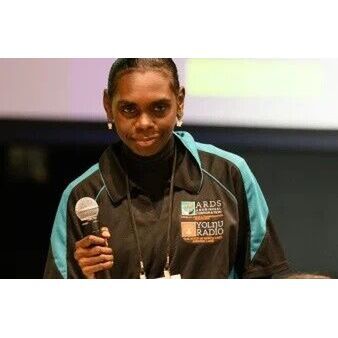
Authors: Melanie Williams (ARDS Aboriginal Corporation), Gawura Waṉambi (ARDS Aboriginal Corporation, Sylvia Ŋulpinditj (ARDS Aboriginal Corporation), Wuṯpurrŋu Wununŋmurra (ARDS Aboriginal Corporation)

Yolŋu people are the Indigenous people from Northeast Arnhem Land. Yolŋu have their own strong ways of watching carefully, seeing small signs, and knowing when something in wäŋa (land/country, including people) is changing. From these signs, Yolŋu understand what is happening and what they should do – this is the heart of evaluation. We will take the audience on a journey to see the world, and the work of trying to make sense of it, through Yolŋu eyes.

From the start, ARDS has followed the guidance of Yolŋu ŋaḻapaḻ (elders). They have given us the values and framework we work with. This ARDS-ku buyu’ (methodology) is rooted in Yolŋu rom (law) and has been followed for a long time. At ARDS this is our foundation for all our work, including how we think about evaluation.

There are many wataŋu mala (owners and decision-makers) we must think about. Everyone’s räl (hard work and effort) is needed to make the project strong. When we show respect, integrity and trust, we can come to a shared agreement together. This is the Yolŋu way.

Yolŋu metaphors help us appreciate how Yolŋu people have been understanding and valuing growth for many generations. These stories, together with ARDS-ku buyu', are the foundation of our shared evaluation work. We will use the metaphor of the ḻipaḻipa (canoe) to explain our evaluation framework. It has been used in many of our projects.

In this presentation, we will share one example from a child protection project in remote Northeast Arnhem Land. It shows how our approach works in practice.

We want to show you the strength, beauty and depth of Yolŋu ways of understanding, making sense of change, and taking steps forward—and how we do this side-by-side with our non-Yolŋu family and partners.
Speakers
MW

Melanie Williams

ARDS Aboriginal Corporation
GW

Gawura Waṉambi

ARDS Aboriginal Corporation
SN

Sylvia Ŋulpinditj

ARDS Aboriginal Corporation
MM

Maminydjama Maymuru

ARDS Aboriginal Corporation
Thursday September 17, 2026 10:30am - 11:30am ACST
Hall 2

10:30am ACST

Challenging power through MEL: What can Australian and international development evaluators learn from each other?
Thursday September 17, 2026 10:30am - 11:30am ACST
Authors: Elisabeth Jackson (Centre For Human Security and Social Change, La Trobe University), Thushara Dibley Centre For Human Security and Social Change, La Trobe University, Shane D'Angelo Centre For Human Security and Social Change, La Trobe University)

This roundtable explores MEL as a practice that can challenge existing power structures and strengthen community voices. It aims to promote sharing and learning between evaluators in domestic and international contexts and build new connections between evaluators who share similar approaches and principles.

Across diverse approaches such as culturally responsive and Indigenous evaluation, realist approaches, and place-based methods, practitioners are asking: whose worldview shapes what counts as evidence? While the language used in different sectors varies, there are strong common threads: centring marginalised voices, working collaboratively, reflecting on our own assumptions, and valuing local knowledge.

This session is designed for intermediate to advanced evaluators who are thinking critically about power, partnership, and the politics of evidence. Participants will explore what is common across approaches in domestic and international contexts and how these are creating space for different worldviews and supporting forms of evidence that are meaningful to communities.

After a short framing and brief examples, participants will move into structured small-group discussions to surface shared tensions and practical insights. Prompts will include: What is one way your current evaluation practice may reinforce existing power dynamics? Where have you seen MEL genuinely shift decision-making power? What institutional constraints limit these approaches? Groups will then report back in a facilitated plenary. Participants will be invited to identify one insight they will take back into their own practice and one structural barrier the evaluation field needs to address collectively. Key insights will be shared more broadly through a blog developed after the conference.

The roundtable aligns with the aes26 sub-themes Traditional and New Ways and Ethics and Integrity, inviting participants to reflect on their real-world experience of applying participatory and culturally grounded approaches in different contexts and exploring how these can help disrupt existing power relations.


Speakers
avatar for Elisabeth Jackson

Elisabeth Jackson

Senior Research Fellow, La Trobe University - Centre For Human Security and Social Change
Dr Elisabeth Jackson is a Senior Research Fellow at the Centre for Human Security and Social Change where she conducts research and evaluation in Southeast Asia and the Pacific. She is currently co-leading an impact evaluation of a program working with diverse marginalised groups... Read More →
TD

Thushara Dibley

Centre For Human Security and Social Change, La Trobe University
SD

Shane D'Angelo

Centre For Human Security and Social Change, La Trobe University
Thursday September 17, 2026 10:30am - 11:30am ACST
Rooms 1+2 Stokes Hill Rd, Darwin City NT, Australia

11:30am ACST

Creating Starlight’s First Social Impact Report: What We Learnt
Thursday September 17, 2026 11:30am - 12:00pm ACST
Author: Claire Treadgold, Starlight Children's Foundation, Erika Fortunati, Starlight Children's Foundation
Transparency and accountability are paramount for not-for-profit organisations, with public social impact reporting increasingly becoming an expected practice. While guidance on creating Social Impact Reports is growing in the field, there is still a paucity of clear and accessible resources for not-for-profit organisations looking to create Social Impact Reports, especially those producing one for the first time.

This short paper presentation will share our experience at Starlight Children’s Foundation, an Australian not-for-profit dedicated to brightening the lives of seriously ill children, young people, and their families, in developing and publishing our first Social Impact Report this year. The presentation will cover our experience creating the report, including the decisions and challenges we encountered during the process.

We will discuss how we approached selecting which data to include and leave out, how we navigated balancing different priorities, e.g. the tension between including “pure” research and evaluation data while also presenting data in a marketable and engaging way for external audiences, and how to create a cohesive story of impact that fits within the constraints of one short report.

The objective of this presentation is to share our experience with other evaluators and knowledge sharers to provide realistic, practical insights for other organisations beginning their own Social Impact Report journey. This presentation is suited to foundational and intermediate audiences who are curious about impact reporting or are preparing to undertake it for the first time.  
Speakers
avatar for Claire Treadgold

Claire Treadgold

National Manager, Research & Evaluation, Starlight Children's Foundation
Dr Claire Treadgold is the National Manager of Research and Evaluation for Starlight Children’s Foundation and an Adjunct Associate Professor with the Discipline of Paediatrics,UNSW Medicine & Health, UNSW Sydney She has over twenty years' experience in for-purpose organisations... Read More →
Thursday September 17, 2026 11:30am - 12:00pm ACST
Waterfront 3 Stokes Hill Rd, Darwin City NT, Australia

11:30am ACST

Case studies – an overlooked technique in evaluation?
Thursday September 17, 2026 11:30am - 12:00pm ACST
Authors: Alan Woodward, Alan Woodward Consulting, Leanne Kelly, Alfred Deakin Institute, Deakin University
Evaluations of community-based and place-based programs regularly require methods capable of examining context, relationships, and emergent outcomes. While case studies are a long-standing qualitative research approach, they are often under-utilized or misunderstood within evaluation practice. Drawing on the evaluation of Australian Red Cross’ Community Resilience Teams as an applied example, the presentation demonstrates how case study design enabled exploration of contextual dynamics, stakeholder perspectives, and underlying mechanisms that would not have been visible through survey or indicator-driven approaches alone. Participants will be offered practical guidance on when case studies are suitable and considerations for conducting case study activities.
Speakers
avatar for Alan Woodward

Alan Woodward

Principal, Alan Woodward Consulting
My evaluation experience is broad, ranging from the conduct of evaluations of programs and services, the commissioning of evaluations, the engagement of communities on evaluation activities, the design of evaluation strategies and capacity building within organisations. I work in... Read More →
Thursday September 17, 2026 11:30am - 12:00pm ACST
Waterfront 2 Stokes Hill Rd, Darwin City NT, Australia

11:30am ACST

When the story turns against the evidence: Navigating media scrutiny as evaluators
Thursday September 17, 2026 11:30am - 12:30pm ACST
Authors: Stephanie Carter (Healthconsult), Megan Anderson (Healthconsult), Felicity Miles (Healthconsult)

Evaluation findings do not exist in a vacuum. Evaluators increasingly operate in environments where public and media narratives form alongside, and sometimes ahead of, emerging evidence. In some cases, this scrutiny is heightened even when programs are demonstrating early signs of effectiveness.
This roundtable explores ethical, practical, and relational challenges evaluators face when evaluation findings are still emerging yet are already subject to public scrutiny, interpretation or debate.
This session will draw on real-world examples where early media attention was significant but subsided following the public release of independent evaluation findings, highlighting the role of timing, transparency and credibility in shaping public discourse.
Evaluators operate within complex social, cultural and political “places,” where narratives influence how evidence is understood and trusted. These dynamics are particularly relevant in place-based contexts, where community expectations and local perspectives shape interpretation and use of findings.
Participants will consider questions such as:
• What is the evaluator’s role when media scrutiny oversimplifies findings?
• How do we uphold principles of integrity and independence when public narratives are misaligned with evidence that is still being assessed?
• What strategies help evaluators support clients and communities when media attention becomes a risk?
• How can we strengthen transparent communication without breaching confidentiality or compromising methodological rigour?
The session will be highly interactive, and use structured facilitated reflection to encourage participants to share experiences, unpack dilemmas, and co-develop strategies.
This roundtable will generate practical principles and strategies through:
• Provocation scenarios based on real evaluation–media tensions to spark discussion.
• Small‑group discussion rounds where participants unpack dilemmas, share experiences, and co‑develop strategies.
• Collective synthesis where groups contribute key principles, strategies, and questions to a shared summary.
Speakers
SC

Stephanie Carter

Healthconsult
MA

Megan Anderson

Healthconsult
FM

Felicity Miles

Healthconsult
Thursday September 17, 2026 11:30am - 12:30pm ACST
Rooms 3+4 Stokes Hill Rd, Darwin City NT, Australia

11:30am ACST

Evaluating with the Vanua: A Practical Framework for Relational, Place Based Evaluation in Indigenous Contexts
Thursday September 17, 2026 11:30am - 12:30pm ACST
Author: Elisabeta Torava
Evaluation practice in Indigenous communities across the Pacific and Australia often rely on Western tools that overlook relational obligations, kinship structures, and place based ethics. This session introduces a practical, culturally grounded evaluation approach based on vanua ontology, a relational worldview that positions land, people, and relationships as inseparable. Drawing from my doctoral research with iTaukei communities in Fiji, the session demonstrates how evaluators can design and implement evaluations that honour Indigenous values, strengthen relational accountability, and generate findings that communities recognise as meaningful.
The objective is to demonstrate how evaluators can redesign Western tools and methods to honour Indigenous relational ethics, strengthen cultural integrity, and generate findings that communities recognise and relate with. This work is important because many evaluation tools used across the Pacific and Australia continue to erase relational systems, producing invisibility, misinterpretation, and unintended harm.
The core argument is that evaluation practice must shift from individualistic, decontextualised measures to relational, place‑based approaches grounded in Indigenous worldviews. Three key messages will be shared:
- Western evaluation tools often embed assumptions that conflict with Indigenous relational logics.
- Vanua‑aligned principles offer a culturally coherent foundation for ethical, rigorous evaluation.
- Practical redesign is possible when evaluators centre relationships, place, and collective wellbeing.
Designed as a skill‑building session, the presentation uses hands‑on activities rather than lecture. Participants will analyse a standard Western evaluation tool, identify where invisibility occurs, and collaboratively redesign selected questions using vanua‑based principles. A case vignette and mapping template will guide this process.
Interactivity is promoted through small‑group work, collective mapping, movement‑based clustering, and facilitated dialogue. Participants will leave with a practical mini‑framework and concrete tools they can apply immediately in their own evaluation practice.


Speakers
ET

Elisabeta Torava

Monash University
Thursday September 17, 2026 11:30am - 12:30pm ACST
Rooms 1+2 Stokes Hill Rd, Darwin City NT, Australia

11:30am ACST

Walking in Two Worlds: evaluating First Nations programs in the public sector
Thursday September 17, 2026 11:30am - 12:30pm ACST
Authors: Anna Rasalingam (Attorney-General’s Department), Daniel Maher (Attorney-General’s Department)
This presentation will demonstrate an example of an internal government evaluation team working with First Nations communities in both traditional and new ways.
It will cover the experience of a First Nations-led evaluation team evaluating a Federal Government program, actively overlaying culturally appropriate evaluation methods as they come up against historic government policies and commissioning practices. It will highlight these systemic barriers, our efforts to navigate these barriers to ensure First Nations voices are not only included but central.
From our experiences at the last AES conference, there was a re-occurring theme from fellow evaluators on working with First Nations communities with integrity. This presentation will provide an example of working with and centring First Nations voices.
Utilising the theme of “Walking in Two Worlds”, the presentation will explore dichotomies of traditional and new ways of evaluation within the public sector. Key points will include:
  • Historical colonial barriers of commissioning, designing and implementing evaluations impacting First Nations peoples.
  • Challenges of designing culturally responsive evaluations within this colonial paradigm.
  • Centring First Nations voices, lived experiences, wisdom and perspectives.

The Big Room format would provide flexibility to facilitate culturally appropriate engagement and discussion, including impactful multi-media presentation and in-person discussions.
The presentation will include multiple perspectives of ACCOs engaged in the evaluation as well as the evaluation team.
The presentation will engage participants through inviting shared experiences tackling these barriers and challenges in their work.

Thursday September 17, 2026 11:30am - 12:30pm ACST
Hall 2

12:00pm ACST

Impact beyond food: How Community Pantries function as places of social connection
Thursday September 17, 2026 12:00pm - 12:30pm ACST
Author: Joanne Cummings, Anglicare Sydney
Community food programs are commonly assessed through output-focused lenses, emphasising quantities of food or financial relief provided. This paper draws on a mixed methods evaluation of Anglicare Sydney’s Community Pantry program to argue for an expanded evaluative frame that recognises community pantries as third spaces—informal, non-commercial places beyond home and work where social connection, belonging and trust are built.

The evaluation combined customer and volunteer surveys (n=709), interviews and observations across 10 locations in NSW. While affordable food remained a critical entry point, findings show that many significant outcomes emerged through the Pantry’s role as a third space: a predictable, welcoming environment where people could linger, converse, build relationships and experience dignity without stigma. Customers reported reduced isolation, new friendships and feelings of belonging, while volunteers experienced increased wellbeing, purpose and community connection. These relational conditions also enabled “soft pathways” into further support services that were not easily captured through standard referral metrics alone.

The study offers several practical insights for evaluators. First, place-based programs require outcome frameworks that extend beyond material provision to include dignity, trust, connection and shifting social norms. Second, place itself should be treated as data: physical layouts, hospitality practices and local context shaped experiences and outcomes, making systematic observation an essential method. Third, mixed methods designs were vital for understanding not only what changed, but how third space dynamics generated change over time. Finally, incorporating multiple stakeholder perspectives revealed benefits for communities and volunteers, which may be invisible in customer-based evaluations.

The presentation will walk through the mixed methods approach, share visual examples illustrating how place-based conditions shaped outcomes, and distil three key insights about the relational impact of community pantries. It will conclude with a guided reflection inviting participants to consider how they currently assess belonging, dignity and connection in their own work.


Speakers
JC

Joanne Cummings

Senior Researcher, Anglicare Sydney
Thursday September 17, 2026 12:00pm - 12:30pm ACST
Waterfront 2 Stokes Hill Rd, Darwin City NT, Australia

12:00pm ACST

Evaluating ‘value for the public’: Public value as a framework for assessing impact
Thursday September 17, 2026 12:00pm - 12:30pm ACST
Authors: Danielle Thornton, The Social Research Centre, Stephen Cuttriss, The Social Research Centre
The concept of value is at the heart of evaluation, yet conventional approaches to assessing value tend to focus on effectiveness, utility or efficiency as defined by commissioning agencies and governments. Realist approaches can help push back against the insistence that programs meet narrowly conceived outcome metrics or return on investment but may still fail to capture the range of social benefits generated. The invisibility of these forms of value to policymakers and economists can lead to perverse outcomes: to the recommissioning of ‘effective’ programs of little obvious benefit to participants or the broader community, and the defunding of initiatives that may meet community needs but not policy agendas.

This disconnection, between the types of programs communities want and need, and the programs that get commissioned, feeds into cynicism and distrust of the political class and government as a whole, and left unchecked, risks weakening the social contract on which democratic governance rests.

In this context the concept of public value, that is the social value generated by governments when they act in the public interest, offers an alternative framework grounded in democratic values. Whether as a practical means of accounting for value where impact cannot be quantified, or as a form of evaluative practice which centres the lived experience of citizens, public value asks that we assess programs not only on the terms set by governments, but also the extent to which they contribute to our collective wellbeing.

Drawing on lessons from an evaluation of a program designed to promote respectful sexual relationships among young people, this paper explores the applicability of public value as a framework for accounting for a wider range of social impacts and a method for making an assessment not of ‘value for money’, but the benefits generated for and on behalf of the public.


Speakers
DT

Danielle Thornton

Senior Research Consultant, The Social Research Centre
SC

Stephen Cuttriss

Research Director, The Social Research Centre
Thursday September 17, 2026 12:00pm - 12:30pm ACST
Waterfront 3 Stokes Hill Rd, Darwin City NT, Australia

1:30pm ACST

Walking alongside each other at the pace of trust: how evaluation is only the destination
Thursday September 17, 2026 1:30pm - 2:00pm ACST
Authors: Skye Gooch, Djirra, Rebecca Steunenberg, Djirra, Lesly Zambrano, Djirra ,Taylor Rawson, Djirra
Djirra is proposing short paper presentation about our experience of designing a self-determined program and Monitoring and Evaluation Framework using an Aboriginal-led participatory approach for our specialist Alcohol and Other Drugs service. We aim to demonstrate the value of Aboriginal-led participatory program design approaches.

In our short paper, we will cover the three following core learnings:

•The power of relationships
At Djirra, our Design, Monitoring and Evaluation Officers are embedded in each program area, and our Program Development Lead is also an internal role. The roles' positioning fosters strong, trusting relationships with the teams. This relational approach allows for the design of a rich and empowered program design, for Aboriginal people, by Aboriginal people.
•Walking at the pace of trust
We had the opportunity to take our time with this process, allowing the space for trusting and dynamic dialogue to be fostered. We saw many benefits to this approach, such as the Program Development staff guiding the team while still being led by their expertise, allowing everyone to be able to deeply consider their practice and the evolution of the project, and time to centre rich data and narratives, making the vision and impact about more than just numbers.
•The design journey becomes an outcome in itself
In doing the program design in this approach, the overall process achieved outcomes in being completed itself. By the end of the project, we saw mutual benefits for everyone. Our Program Development staff grew deeper knowledge of the team’s deep and complex context, and the team itself grew their skills and knowledge of systems work.

We aim to deliver this in a slide show format, focusing on engaging visuals and simplicity. We will be opening the presentation up to the audience at the end for a yarn with the presenters.


Speakers
SG

Skye Gooch

Manager of Individual Support Services, Djirra
RS

Rebecca Steunenberg

Team Leader of Alcohol and Other Drugs, Djirra
Thursday September 17, 2026 1:30pm - 2:00pm ACST
Waterfront 3 Stokes Hill Rd, Darwin City NT, Australia

1:30pm ACST

Making Space for multiple perspectives: Collaborative design of Value for Investment evaluations
Thursday September 17, 2026 1:30pm - 2:00pm ACST
Author: Adrian Field, Dovetail Consulting
Value for Investment (VfI) is an emerging evaluation system that is gaining increasing traction internationally. The system is intentionally mixed methods, interdisciplinary and collaborative.
It is this collaborative positioning of VfI that this presentation is focused. In VfI framing, value draws from multiple perspectives of what makes a programme, intervention or policy valuable. Therefore, understanding and capturing value requires a fundamentally collaborative mindset, one that reaches beyond existing data sources and reporting, to explore from many different perspectives what it is that fundamentally matters about the intervention that is the evaluation’s focus.

This presentation draws on learning and approaches in exploring value through participatory design techniques. It will draw on approaches developed and refined across a range of VfI evaluations, in the health, mental health, justice, urban development, transport and creative sectors.
The session will describe a range of facilitative techniques adopted to draw on different stakeholders perspectives on value, and the strengths that they offer for building robust, relevant and actionable evaluations.

Using a VfI lens allied with participatory design techniques, the presentation will explore how value can be brought to life across key evaluation questions, theories of change and value propositions, evaluative rubrics, and collaborative sense-making.

Session participants will gain a clear sense of the possibilities and potential for applying participatory approaches in VfI, and the strengths these offer for evaluation practice.


Speakers
AF

Adrian Field

Director, Dovetail Consulting
Thursday September 17, 2026 1:30pm - 2:00pm ACST
Waterfront 2 Stokes Hill Rd, Darwin City NT, Australia

1:30pm ACST

Process tracing in practice: testing causal claims with mixed evidence
Thursday September 17, 2026 1:30pm - 2:30pm ACST
Author: Kizzy Gandy, Jacaranda Partners

Learning objective: Participants will be able to construct core and alternative hypotheses from a theory of change, design evidence tests to distinguish between them and make defensible causal claims.

Contribution analysis is now widely used in Australian evaluation practice, but many evaluators stop short of the next step: systematically testing whether something other than the program explains the observed outcomes. Process tracing does exactly this. It raises the rigour of causal claims not by collecting more data, but by being more deliberate about what the data needs to show — and what it would need to show if the alternative explanation were true instead.

This workshop uses a real evaluation of the Embrace Multicultural Mental Health Project as a case study. The Embrace evaluation combined contribution analysis and process tracing with a mixed-method design including a quasi-experimental quantitative survey and qualitative interviews. It produced a result that many evaluations encounter but few handle well: the quantitative analysis found the program had no detectable effect on key outcomes, yet qualitative evidence suggested it was working. Process tracing provided the analytical framework to distinguish between three plausible explanations — the program failed, the effects take time to materialise, or competing programs are producing the same outcomes.

Participants work through three structured exercises: translating a theory of change into core and alternative hypotheses; designing evidence tests that can distinguish between them; and applying evaluator judgement to weight mixed evidence and reach a defensible conclusion. Each exercise uses the Embrace case, with reflection prompts connecting the method to participants' own evaluations.

The workshop is aimed at intermediate to advanced evaluators working on complex programs.
Speakers
KG

Kizzy Gandy

Jacaranda Partners
Thursday September 17, 2026 1:30pm - 2:30pm ACST
Rooms 3+4 Stokes Hill Rd, Darwin City NT, Australia

2:00pm ACST

Ignites
Thursday September 17, 2026 2:00pm - 3:00pm ACST
Ethics for Evaluation
Author: Trina O'Donnell, Bellberry
Why do we have ethics reviews, who makes up the HREC, and when is a HREC review required? What are common issues that arise in the review of evaluations from the HREC perspective?

How can these be addressed to make the ethics application process smoother? The session will focus on the ethics review in contexts such as community-based evaluation, and policy or program evaluation, and we will explore issues that arise from the ethics review from Human Research Ethics Committees (HRECs) for evaluation.

Practical insights from HREC reviews will exemplify common issues from a HREC perspective. Examples of common HREC comments will introduce issues including study design, consent, community engagement, respecting Indigenous perspectives and local knowledge, managing language and cultural differences, and responding ethically to the growing use of artificial intelligence and data technologies in evaluation.

Presence builds trust: How place-based engagement transformed participation in NSW First Nations Digital Inclusion evaluation
Authors: Megan Brewer, Nous Group, Rodney Williams, Nous Group, Taliah King, Nous Group
Evaluating programs with First Nations communities requires time, presence, and trust. An evaluation of First Nations Digital Inclusion meant learning and adapting, shifting to a snowballing, place‑based approach – spending extended time in community and working with trusted navigators through a three-way partnership model. Participation increased substantially. Being physically present in remote and regional communities enabled rapport‑building, referrals, and engagement with people unlikely to participate through conventional methods. Higher participation led directly to stronger survey response numbers, deeper qualitative insights, and more credible evaluation findings. We show why investing time in-place, relationships, and partnership is central to evaluation quality.


Cultural identity as a shield: Measuring the social value of Culture and Kinship
Authors: Louise Green, Victorian Aboriginal Community Controlled Health Organisation, Lily Edwards
This presentation shares learnings from research by VACCHO and Victorian Aboriginal Community-Controlled Organisations (ACCOs), exploring how strengthening Identity and Cultural connectedness and practice, drives positive long-term health and wellbeing outcomes.

Building on a 2022 evaluation of the Culture and Kinship Model, the research is driven and sustained by Aboriginal leadership and Cultural governance and uses a SROI methodology to understand drivers of change and inform future recommendations.

Supported by Kowa Collaboration, Aboriginal-led evaluation consultancy, the approach is grounded in culturally responsive stakeholder engagement — including Impact and Value Yarning — to enable participatory interpretation and translation of knowledge and evidence.

Shifting the power: evaluation enabled, embedded and used in local contexts
Authors: Jessie Meaney-Davis Institute for Sustainable Futures, University of Technology Sydney, Satib Nisha Khan Khan, Birth Fiji, Mary Raori, Australian Volunteers Program (Fiji)
Organisational capacity assessments in international development are often experienced by organisations in Asia and the Pacific as externally driven compliance exercises, disconnected from everyday decision-making. This paper presents an alternative model in which 14 organisations in Fiji, Indonesia, Sri Lanka, and Vietnam — including some with no prior research experience — led participatory research on organisational capacity strengthening over three years, supported by the Australian Volunteers Program and the Institute for Sustainable Futures at the University of Technology Sydney.

Drawing on reflections from BIRTH Fiji, the paper identifies three interrelated shifts in power. First, embedding evaluative inquiry into organisational routines created space for learning and reflection in contexts dominated by delivery pressures and compliance-focused monitoring, evaluation, and learning (MEL). Evaluation became a tool for adaptation and strategic thinking rather than reporting alone. Second, organisations developed confidence, skills, and ownership by leading the evaluation process themselves, with external actors acting as facilitators rather than controllers. Evaluation therefore contributed directly to organisational capacity strengthening. Third, the process fostered peer learning across the 14 organisations, creating horizontal networks of exchange and redistributing knowledge and influence away from donor-centric models. The paper argues that meaningful power shifts in evaluation require locally led, embedded, and sustained evaluative practice.

Brokering and interpreting evaluation: An iTaukei experience
Authors: Marilyn Vilisoni, Solve Pacific Consultancy
This presentation follows an iTaukei (Fijian) evaluator’s transition from a donor‑driven MEL role to independent consultancy, where evaluation becomes an act of brokering between donor logic and Indigenous priorities grounded in the preservation and revitalisation of iTaukei (Fijian) culture and traditions. It highlights three insights: (i) the evaluator’s role as a cultural broker navigating the space between external accountability and Indigenous values; (ii) the importance of cultural humility, emotional intelligence, and comfort with ambiguity in this intermediary work; and (iii) the centrality of trust in shaping MEL systems that honour both accountability requirements and the lived realities of Pacific communities.
Speakers
LG

Louise Green

Strategic Project Manager - Culture and Kinship, VACCHO
avatar for Rodney Williams

Rodney Williams

Principal, Nous Group
Rodney is an Aboriginal man (Guwa/Koa) with diverse industry experience across the private, public and community sectors where he has held board, senior executive and management roles. He brings over 25 years’ experience in consulting, Indigenous economic development, banking and... Read More →
MV

Marilyn Vilisoni

Managing Director, Solve Pacific
LE

Lily Edwards

Project Officer, Wathaurong
MB

Megan Brewer

Director, Nous Group
TO

Trina O'Donnell

Director Of Strategic Projects, Bellberry
SN

Satib Nisha Khan Khan

Founder and CEO, Birth Fiji
Thursday September 17, 2026 2:00pm - 3:00pm ACST
Waterfront 2 Stokes Hill Rd, Darwin City NT, Australia

2:00pm ACST

Is there room in the C-suite for evaluators?
Thursday September 17, 2026 2:00pm - 3:00pm ACST
Authors: Dana Cross, Piacarmel Andrews, Lyn Alderman

Across sectors, evaluators are increasingly seeking to move beyond assessing programs to shaping strategy, informing investment, strengthening accountability and supporting learning. Recent initiatives such as the Strengthening Evaluation in the Australian Government – Action Plan 2026–2030, with its emphasis on evaluation leadership, culture and use (and a call for Chief Evaluation Officers), reflect a broader trend: evaluation is being positioned as a core contributor to governance and decision making rather than a purely technical or advisory function.

This shift raises a provocative and timely question for the evaluation community: is there room in the C-suite for evaluators?

The presenters will explore whether closer proximity to executive power is necessary to strengthen evaluation’s influence and what might be gained or lost in the process. Rather than assuming that seniority automatically delivers impact, the discussion will examine different models of leadership, authority and positioning for evaluation across diverse organisational contexts.

Presenters will explore tensions such as:
  • Whether executive level access enhances evaluation use or risks compromising independence and credibility.
  • How evaluation leadership can be exercised without formal C suite roles.
  • What “good” evaluation leadership looks like in different sectors, cultures and places
Drawing on lived experience from across settings, the panel will reflect on how evaluation currently shows up, or fails to show up, in senior decision making forums, and what alternatives exist for strengthening its influence. Audience pulse questions will be used to give live insights to broader experiences and views, with time for questions at the end of the session inviting participants to share perspectives from their own contexts and challenge assumptions about status, power and professional identity in evaluation.

Speakers
avatar for Dana Cross

Dana Cross

Associate Director, Grosvenor Public Sector Advisory
Dana is a public sector expert, possessing over 17 years of deep experience advising government organisations on program evaluation, organisational review, service optimisation and performance management. She is a member of Grosvenor’s Executive Leadership Team as Head of Strategy... Read More →
LA

Lyn Alderman

The Evaluators' Collective
Thursday September 17, 2026 2:00pm - 3:00pm ACST
Rooms 1+2 Stokes Hill Rd, Darwin City NT, Australia

2:30pm ACST

Monitoring on a shoestring: How reproducible reporting can help make better use of data.
Thursday September 17, 2026 2:30pm - 3:00pm ACST
Authors: Stephanie Quail (ARTD), Sophie Henness (ARTD)

Non-government organisations (NGOs) and small organisations often face a range of barriers, such as limited funding and staffing, to collecting, analysing, and utilising client and program data to support continuous improvement and decision making. For these organisations, taking an empowerment evaluation approach, which enables them to assess and improve their own programs while building capacity and ownership, has the potential to provide sustainable and ongoing value. Empowerment evaluation strengthens organisational capacity and equips organisations with tools to collect, analyse, and interpret data for ongoing program improvement.

This presentation explores low-cost and high-impact opportunities for embedding monitoring, as demonstrated by our recent work with Bonnie’s Support Service to develop internal capability to administer and analyse a new client satisfaction survey. We will highlight common challenges for small NGOs, and our approaches for setting up monitoring on a shoestring, including:
  • How data is collected, including an overview of free or low-cost survey platforms, and their advantages and disadvantages
  • How data is analysed, including how the free, open-source software R can be used to set up reproducible analysis that once established can be re-used without needing internal quantitative expertise
  • How reports and other outputs are created, including how polished reports incorporating text, figures and tables can be generated using R.
Audience members will leave this presentation with an understanding of common challenges to setting up and analysing client satisfaction survey data, the advantages and disadvantages of available open-source platforms, and practical approaches for setting up reproducible analysis and reports. Attendees will receive a free online toolkit we have developed which organisations can use to guide the development of their own low-cost monitoring and reproducible reporting.

Speakers
avatar for Stephanie Quail

Stephanie Quail

Senior Manager, ARTD
SH

Sophie Henness

ARTD Consultants
Thursday September 17, 2026 2:30pm - 3:00pm ACST
Rooms 3+4 Stokes Hill Rd, Darwin City NT, Australia

3:30pm ACST

Culturally Governed Evaluation: Reframing First Nations Engagement from Consultation and Co-design to Governance
Thursday September 17, 2026 3:30pm - 4:00pm ACST
Authors: Sarah Jane Springer (Springer Health Consultants), Catherine Boekel (Whereto Research)
Evaluation involving Aboriginal and Torres Strait Islander peoples has historically positioned First Nations engagement as a consultation activity occurring after evaluation priorities, frameworks and methods have already been determined. Even approaches framed as co-design can unintentionally reproduce existing power structures in knowledge generation and limit the capacity of evaluation to reflect First Nations governance, priorities and ways of knowing.

This paper introduces the Culturally Governed Evaluation Framework, an emerging methodological approach that embeds First Nations authority within the governance structures that determine evaluation purpose, design, interpretation and accountability. In this approach, engagement is not positioned as advisory input, but as a governance function within the evaluation system itself.

The framework is grounded in three interconnected principles:
  • First Nations authority, embedding leadership within governance structures that shape priorities and definitions of success;
  • Relational accountability, ensuring evaluation is grounded in trust, reciprocity and sustained engagement; and
  • Shared interpretation, enabling findings to be interpreted through First Nations knowledge systems with shared authority in meaning-making.

By foregrounding governance and relational accountability, this approach contributes to national discussions on ethics, power and methodological legitimacy. It aligns with reform agendas including the National Agreement on Closing the Gap and has direct implications for how evaluation is commissioned, governed and interpreted across government, research and community settings.

The presentation will invite critical reflection on how culturally governed approaches can reshape evaluation practice and strengthen both the legitimacy and effectiveness of evaluation outcomes.

Speakers
SJ

Sarah Jane Springer

Springer Health Consultants
Thursday September 17, 2026 3:30pm - 4:00pm ACST
Hall 2

3:30pm ACST

Uncertain impacts, real decisions: measuring and communicating causal uncertainty in quantitative evaluations
Thursday September 17, 2026 3:30pm - 4:00pm ACST
Author: Dimitria Gavalyugova, NSW Department of Education
Evaluators face a core dilemma: decision-makers typically expect a definitive measure of program impact, yet the designs capable of delivering one are rarely feasible for large-scale government programs. Quasi-experimental methods and administrative data are often the only tools available to quantify long-term outcomes, but the assumptions needed to establish causal impact cannot always be met – or tested – with available data. This mismatch has driven evaluations into a sub-optimal equilibrium where uncertainty is understated, even though addressing it could lead to better-informed decisions. This presentation explores how to reconcile the need for reporting actionable findings with what the evidence can support.

The session draws on systematic analysis of the 22 combined outcome and economic evaluations published in the NSW Treasury library. By mapping the confidence of causal language attributing outcomes to programs across report sections, the analysis identifies a persistent "within-document gap." In many cases, findings are treated as causal in executive summaries and recommendations, even when underlying methodologies note that they should be interpreted with caution. Scoring each estimation strategy against a risk-of-bias framework reveals observable misalignment between evaluations’ methodological constraints and the confidence of causal claims.

When causality is uncertain, the program effect that gets monetised in economic evaluations contains the true impact plus some degree of bias. Existing guidance addresses uncertainty around monetary parameters and discount rates, but not around estimated program impacts. In the absence of such guidance, the evidence shows that potentially biased estimates routinely enter cost-benefit analyses as true effects. Using an anonymised real-world example, the presentation demonstrates how even small levels of bias can alter benefit-cost ratios and funding recommendations.

The session invites participants to collectively explore practical solutions across four areas: leveraging available methods and data to strengthen evidence, turning limitations into guidance for future evaluation design, communicating uncertainty effectively, and modelling uncertain impacts within economic analyses.


Speakers
DG

Dimitria Gavalyugova

Senior Research and Evaluation Officer, NSW Department of Education
Thursday September 17, 2026 3:30pm - 4:00pm ACST
Waterfront 1 Stokes Hill Rd, Darwin City NT, Australia

4:00pm ACST

Quality evaluation that makes a difference: continuing the conversation
Thursday September 17, 2026 4:00pm - 5:00pm ACST
Author: Carina Calzoni, AES Rob Sale, nous

The AES has been exploring its vision of “quality evaluation that makes a difference” through a strategic project - engaging members and examining evaluation theory and practice. This work has surfaced a central challenge: while the phrase is compelling, its meaning is complex, contested, and shaped by context.

This roundtable begins from that complexity—but does not seek to resolve it. Instead, it focuses on what comes next.
We will briefly share insights from the journey so far, including the multiple dimensions of “evaluation”, “quality”, and “making a difference”. These span tensions between evaluation as process, product, and profession; competing perspectives on quality (e.g. standards, utility, impact, values); and diverse understandings of use and influence across contexts and stakeholders.

The primary purpose of the session is to co-design how this conversation continues across the AES community. Participants will engage in facilitated small-group discussions to explore key questions: What does quality evaluation mean in your context? Who defines it? What does “making a difference” look like—and for whom? How should these conversations evolve as contexts, practice, and membership change?

Participants will then work together to identify practical ways to sustain and deepen engagement, such as ongoing communities of practice, publications, podcasts, or future conference formats. The session will capture and share these ideas to inform AES’s ongoing work.

Designed for intermediate to advanced evaluators, this roundtable creates space for collective reflection and future-oriented dialogue. By centring plurality and participation, it supports the AES vision by keeping the conversation alive—recognising that what constitutes “quality evaluation that makes a difference” must continue to evolve with the field.
Speakers
Thursday September 17, 2026 4:00pm - 5:00pm ACST
Rooms 3+4 Stokes Hill Rd, Darwin City NT, Australia

4:00pm ACST

Strengthening community mental wellbeing through culturally grounded and practical evaluation tools in Vanuatu.
Thursday September 17, 2026 4:00pm - 5:00pm ACST
Author: Michael Taiki, Lokol Solutions

This Skill Building session introduces three practical, culturally grounded evaluation tools developed through Churches of Christ Vanuatu’s (CCCV) mental wellbeing work: the Faith + Data Model, the Youth Risk‑Mapping Tool and Trauma‑Informed Storian Circles. These tools emerged from a multi‑year program involving a 1,110‑household Urban Study, youth behavioural data, earthquake trauma responses and community‑driven interventions. The session addresses a core challenge in evaluation: how to design methods that are rigorous, culturally resonant and effective in low‑resource, cross‑cultural settings.
The objective of the presentation is to equip evaluators with adaptable tools that integrate community evidence, kastom practices and faith‑based strengths to strengthen mental wellbeing systems. This topic is important because evaluators increasingly work in culturally diverse contexts where Western evaluation methods alone are insufficient for capturing lived experience, trauma, and relational dynamics.
The presentation advances three key messages:
1.Evaluation must integrate cultural and spiritual knowledge with data to produce meaningful insights.
2.Youth wellbeing requires rapid, context‑specific assessment tools that identify patterns of risk and guide targeted interventions.
3.Trauma‑aware, culturally grounded qualitative methods can generate rich data while supporting community healing and resilience.
Each tool is introduced through a short demonstration using real CCCV examples, followed by a structured group activity where participants apply the tool to a scenario. This design ensures that participants not only understand the concepts but also practice using them in a supportive environment.
The session will be interactive through small‑group exercises, reflective discussions and scenario‑based problem‑solving. Participants will map youth risks, design a Storian Circle prompt and apply the Faith + Data Model to a community case study. These activities encourage peer learning, cultural reflection and practical skill development.
By the end of the session, participants will leave with three adaptable tools they can apply immediately in their own evaluation contexts.


Speakers
Thursday September 17, 2026 4:00pm - 5:00pm ACST
Rooms 1+2 Stokes Hill Rd, Darwin City NT, Australia

4:00pm ACST

Meeting new challenges with better theories of change
Thursday September 17, 2026 4:00pm - 5:00pm ACST
Authors: Patricia Rogers, Footprint Evaluation Initiative, Emil Laurberg Morgensen, University of Southern Denmark
Theories of change are now commonly used to design initiatives, including projects, programs and policies, and to shape monitoring and evaluation.  But 40 years after first being showcased at an AES conference, these are often developed and used in ways that don’t fit what is needed, especially to support adaptation across different settings and in changing contexts.  This session will present common mistakes, what they are, why they matter, and examples of better strategies.  Participants will engage with exercises to identify issues, try out strategies and explore possible applications in their own work and in shaping organisational requirements and procedures.
Speakers
avatar for Patricia Rogers

Patricia Rogers

Co-founder, Footprint Evaluation Initiative
Founder of BetterEvaluation and former Professor of Public Sector Evaluation at RMIT University. Now working as consultant and advisor. My work has focused on supporting appropriate choice and use of evaluation methods and approaches to suit purposes and context. I am currently working... Read More →
avatar for Emil Laurberg Mogensen

Emil Laurberg Mogensen

Odense University Hospital, Department Of Clinical Research, University Of Southern Denmark
Thursday September 17, 2026 4:00pm - 5:00pm ACST
Hall 2

4:30pm ACST

Making Space for Evaluation: How the UK and Australia Are Improving Evaluation Across Government
Thursday September 17, 2026 4:30pm - 5:00pm ACST
Author: Lucie Moore, Commonwealth Treasury
Across governments, there is growing recognition of the need to make space for high quality evidence and embed evaluation into policy design and decision‑making. This presentation examines what two national governments, the UK and Australia, are doing to improve the quality, quantity and use of evaluation across the public sector, drawing on my personal experience working within both the UK Government’s Evaluation Task Force (ETF) and the Australian Government’s Australian Centre for Evaluation (ACE).

In the UK, the ETF is a joint Cabinet Office–HM Treasury unit established to ensure that evidence and evaluation sit “at the heart of spending decisions”. It works to improve how government programmes are evaluated, providing advice on designing and delivering evaluations and challenging departments to be transparent by including evaluations on the publicly accessible, Evaluation Registry website. The ETF also leads cross‑government capability building, including the Evaluation Academy, which has trained hundreds of evaluation experts who have in turn trained thousands of public servants on evaluation. These initiatives aim to expand both the volume and quality of evaluation activity and strengthen its use in decision‑making.

In Australia, ACE was established to “put evaluation evidence at the heart of policy design and decision‑making,” with a mandate to improve the volume, quality and use of evaluation evidence across government. ACE supports the Commonwealth Evaluation Policy, strengthens evaluation capability, delivers evaluations, and improves evaluation planning in the budget process. Together, these reforms seek to build an evaluative culture across the Australian Public Service.

The objective of this presentation is to share these cross‑government efforts with the wider evaluation community, highlighting traditions and new ways, boundaries and bridges, and the roots and routes shaping reform, and to provide space for attendees to ask questions and explore implications.


Thursday September 17, 2026 4:30pm - 5:00pm ACST
Waterfront 2 Stokes Hill Rd, Darwin City NT, Australia
 
  • Filter By Date
  • Filter By Room
  • Filter By Type
  • Format
  • Audience Level
  • Industry
  • ID
  • Timezone

Share Modal

Share this link via

Or copy link

Filter sessions
Apply filters to sessions.
Filtered by Date -