Loading…
This is the draft aes26 program, subject to change. To register for workshops and the conference, go to: https://www.aes26.aes.asn.au/
Company: Big room clear filter
Wednesday, September 16
 

11:00am ACST

Introduction to Evidence for New, Emerging and Non-Evaluators
Wednesday September 16, 2026 11:00am - 12:00pm ACST
Author: Charlie Tulloch (Policy Performance)

This session at the start of the conference orients new, emerging and non-evaluators to the types of topics and content they will encounter over the coming days. It provides a foundational overview of evidence-related fields (e.g. evidence, monitoring, evaluation, learning), debunks key concepts/language, offers insights into what evaluators do day-to-day, discusses values/valuing, ethical considerations, competencies and key steps usually considered when completing high quality evaluation projects.The session strengthens defines the boundaries and intersections of evaluation and other disciplines to understand this field of endeavour, the pathways in and the opportunities it offers.

The session’s main aims are to share and discuss:
  • How evidence is used in different policy and organisational landscapes
  • The roles and types of projects led by evaluators
  • Techniques frequently used by evaluators•Ways that evaluators think (logic, data, outputs, outcomes, impact)
  • Why and when evaluations happen (or do not)
  • Practical tips for evaluation commissioners and working with evaluators
  • Capability building (skills and knowledge) to promote use of evaluation in-house
  • A seven-stage approach to planning and conducting an evaluation project
  • Essential skills of evaluators, including logic modelling, defining key/interview questions, forming value judgments, and selecting effective evaluation approaches/methods.The session will provide attendees with an opportunity to ask questions anonymously, so they feel very comfortable as the conference commences.

Questions will be addressed during the session, creating an open, interactive discussion.The session will also provide an overview of the conference structure, learning opportunities and flow, to provide a guide to attendees about how to gain the most value from their time.


Speakers
avatar for Charlie Tulloch

Charlie Tulloch

Director, Policy Performance
Policy Performance is a proud conference sponsor! Charlie delivers evaluation projects, capability building support and drives public sector improvement. Charlie loves to help those who are new to evaluation or transitioning from related disciplines. He is a past AES Board member... Read More →
Wednesday September 16, 2026 11:00am - 12:00pm ACST
Hall 2

2:30pm ACST

Beyond Symbolic Inclusion - Building a Collective Mandate for Indigenous-Led Understanding Measurement Evaluation & Learning (UMEL)
Wednesday September 16, 2026 2:30pm - 3:30pm ACST
Author: Liz Wren (Gilibanga)

Overview: For too long, Aboriginal and Torres Strait Islander practitioners have navigated a ‘middle space’—a complex intersection where Cultural obligations to Community and Country often collide with the rigid, competitive structures of Western bureaucracy. This session, presented by Gilibanga, synthesises critical insights from the Gilibanga Blak Think Tank based on the original work of the First Nations UMEL Peer Learning Circles, a national initiative conducted between 2025 and 2026 as part of a collaboration between Kowa and the Social Enterprise Development Initiative (SEDI).
The Collective Mandate: Moving beyond deficit-based ‘capacity building,’ this session articulates a Collective Mandate for the evaluation sector. We challenge the industry to shift from a model of individual scarcity to one of communal abundance. Drawing on the "U" in UMEL—Understanding—we prioritise early investment in relationships, local context, and Community aspirations as the foundational bedrock of all evaluative work.
Key Themes for Discussion: Participants will engage with four transformative thematic areas identified by the First Nations evaluation community:
• Structural Reformation: Moving from competitive procurement models that force "Mob to compete" toward collaborative contracting and ecosystem thinking.
• Dual Accountability: Acknowledging the emotional and professional labour required to hold ‘Two-Worlds’ practice, balancing contractual obligations with Cultural integrity.
• Broadening the Definition of "Evaluator": Validating place-based, relational, and lived expertise that exists outside traditional Western academic credentials.
• Material Decolonisation: Shifting from symbolic language to the practical transformation of contracts, reporting templates, and the active upholding of Indigenous Data Sovereignty.

Speakers
Wednesday September 16, 2026 2:30pm - 3:30pm ACST
Hall 2
 
Thursday, September 17
 

10:30am ACST

"Yalalamirri mala-djarr’yun – “and then we check” Understanding and sensemaking the Yolŋu way"
Thursday September 17, 2026 10:30am - 11:30am ACST
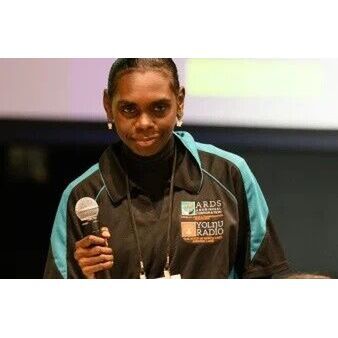
Authors: Melanie Williams (ARDS Aboriginal Corporation), Gawura Waṉambi (ARDS Aboriginal Corporation, Sylvia Ŋulpinditj (ARDS Aboriginal Corporation), Wuṯpurrŋu Wununŋmurra (ARDS Aboriginal Corporation)

Yolŋu people are the Indigenous people from Northeast Arnhem Land. Yolŋu have their own strong ways of watching carefully, seeing small signs, and knowing when something in wäŋa (land/country, including people) is changing. From these signs, Yolŋu understand what is happening and what they should do – this is the heart of evaluation. We will take the audience on a journey to see the world, and the work of trying to make sense of it, through Yolŋu eyes.

From the start, ARDS has followed the guidance of Yolŋu ŋaḻapaḻ (elders). They have given us the values and framework we work with. This ARDS-ku buyu’ (methodology) is rooted in Yolŋu rom (law) and has been followed for a long time. At ARDS this is our foundation for all our work, including how we think about evaluation.

There are many wataŋu mala (owners and decision-makers) we must think about. Everyone’s räl (hard work and effort) is needed to make the project strong. When we show respect, integrity and trust, we can come to a shared agreement together. This is the Yolŋu way.

Yolŋu metaphors help us appreciate how Yolŋu people have been understanding and valuing growth for many generations. These stories, together with ARDS-ku buyu', are the foundation of our shared evaluation work. We will use the metaphor of the ḻipaḻipa (canoe) to explain our evaluation framework. It has been used in many of our projects.

In this presentation, we will share one example from a child protection project in remote Northeast Arnhem Land. It shows how our approach works in practice.

We want to show you the strength, beauty and depth of Yolŋu ways of understanding, making sense of change, and taking steps forward—and how we do this side-by-side with our non-Yolŋu family and partners.
Speakers
MW

Melanie Williams

ARDS Aboriginal Corporation
GW

Gawura Waṉambi

ARDS Aboriginal Corporation
SN

Sylvia Ŋulpinditj

ARDS Aboriginal Corporation
MM

Maminydjama Maymuru

ARDS Aboriginal Corporation
Thursday September 17, 2026 10:30am - 11:30am ACST
Hall 2

11:30am ACST

Walking in Two Worlds: evaluating First Nations programs in the public sector
Thursday September 17, 2026 11:30am - 12:30pm ACST
Authors: Anna Rasalingam (Attorney-General’s Department), Daniel Maher (Attorney-General’s Department)
This presentation will demonstrate an example of an internal government evaluation team working with First Nations communities in both traditional and new ways.
It will cover the experience of a First Nations-led evaluation team evaluating a Federal Government program, actively overlaying culturally appropriate evaluation methods as they come up against historic government policies and commissioning practices. It will highlight these systemic barriers, our efforts to navigate these barriers to ensure First Nations voices are not only included but central.
From our experiences at the last AES conference, there was a re-occurring theme from fellow evaluators on working with First Nations communities with integrity. This presentation will provide an example of working with and centring First Nations voices.
Utilising the theme of “Walking in Two Worlds”, the presentation will explore dichotomies of traditional and new ways of evaluation within the public sector. Key points will include:
  • Historical colonial barriers of commissioning, designing and implementing evaluations impacting First Nations peoples.
  • Challenges of designing culturally responsive evaluations within this colonial paradigm.
  • Centring First Nations voices, lived experiences, wisdom and perspectives.

The Big Room format would provide flexibility to facilitate culturally appropriate engagement and discussion, including impactful multi-media presentation and in-person discussions.
The presentation will include multiple perspectives of ACCOs engaged in the evaluation as well as the evaluation team.
The presentation will engage participants through inviting shared experiences tackling these barriers and challenges in their work.

Thursday September 17, 2026 11:30am - 12:30pm ACST
Hall 2
 
Friday, September 18
 

10:30am ACST

Who defines a ‘professional’ evaluator? Roots and routes across government reform and the evaluation field
Friday September 18, 2026 10:30am - 11:30am ACST
Authors: Ruth Nicholls, Treasury. Eleanor Williams, ACE, Tony Kiessler, Australian Indigenous Psychology, Liz Wren, Kowa, Jade Maloney, ARTD, Nigel McPaul, Dementia Org
In an era of public sector reform, the evaluation profession is being reshaped from multiple directions. In Australia, this is occurring through two intersecting pathways: the Australian Public Service (APS) Evaluation Profession, established as part of broader APS Reform; and the ongoing question of professionalisation within the Australian Evaluation Society (AES) and the evaluation field more broadly. This panel explores how these two “routes” to professionalism interact, reinforce and sometimes challenge one another. The discussion asks how evaluation can remain grounded in its core professional principles of rigour, ethics, cultural responsiveness and learning; while adapting to new institutional expectations, roles and accountabilities.

Using the APS Evaluation Profession Strategy as a starting point, panellists will reflect on how professionalism is being articulated, operationalised and experienced within government. They will consider what it means to professionalise evaluation inside a public service context shaped by reform agendas, capability frameworks and system stewardship.

At the same time, the panel will widen the lens to examine how professionalism has traditionally been understood within the AES: through standards, competencies, peer accountability and professional identity. We will explore what this means for First Nations Evaluators.

Rather than assuming these perspectives naturally align, the panel will surface key tensions and questions. Who defines what “good” or “professional” evaluation looks like? How do institutional reform agendas interact with professional norms developed within the evaluation community? What happens when professional judgement, independence or methodological standards are tested by political urgency, contested evidence or strong beliefs? And how do unconscious biases and assumptions shape whose knowledge is valued and whose evidence is trusted? What might be lost with professionalisation - in particular diversification of evaluators and building evaluative thinking into all types of roles - and how we might avoid this.


Speakers
avatar for Jade Maloney

Jade Maloney

CEO, ARTD
I work with government agencies, not-for-profits and citizens to co-design, refine, communicate and evaluate social policies, regulatory systems and programs. I am passionate about ensuring citizens have a voice in shaping the policies that affect their lives, translating research... Read More →
avatar for Eleanor Williams

Eleanor Williams

Managing Director, ACE
Eleanor Williams is the Managing Director of the Australian Centre for Evaluation and established the Australian Public Sector Evaluation Network in 2019. She is a former AES Board member and chairs the OECD's Public Policy Evaluation Experts group.

Eleanor is currently undertaking PhD research on evidence use in fast-paced policy contexts with supervisors at the University of Queensland and University College London and has a particular interest in rapid evaluation methods... Read More →
RN

Ruth Nicholls

Director, Treasury
TK

Tony Kiessler

CEO, Australian Indigenous Psychology
Friday September 18, 2026 10:30am - 11:30am ACST
Hall 2

1:30pm ACST

The 2026 (Mostly-Serious) Crowd-Sourced Debate: Evaluation’s pluralism and its external influence
Friday September 18, 2026 1:30pm - 2:30pm ACST
Authors: Bethany Hanson, Tafe NSW, Emily Gates, Boston University, Martina Donkers
Strap in for a provocative, contentious, and fun session. We’re putting a spin on the classic debate where two teams will go head-to-head to argue the topic: “Evaluation’s pluralism strengthens its external influence.”

On the affirmative side, a spirited case for why pluralism is evaluation’s superpower. Surely leaning into our intersections with disciplines like policy, research and economics expands our reach, relevance, and impact. Embracing pluralism helps evaluators speak multiple “languages,” build trust with diverse stakeholders, and positions evaluation as a boundary‑spanning connector capable of influencing decisions in complex systems. Think: more collaboration, more innovation, and more doors opening because evaluators can flex and adapt.

The negative team will challenge! Doesn’t boundless pluralism stretch evaluation too far, making our unique identity fuzzy and our professional standards harder to uphold? Aren’t we risking dilution of expertise and inconsistencies in practice? Won’t trying to be “everything to everyone” only confuse commissioners and undermine the credibility we’ve spent decades building? Without firmer boundaries, evaluation risks becoming a methodological buffet with no clear value proposition at all.

And then there’s you- our third speaker. A debate without rebuttal is like an evaluation report without findings—unthinkable! So, you’ll choose a side and with a team of fellow audience-members and debaters, craft a knockout final argument for our third speakers.

Will it be chaotic? Quite possibly. Could things get messy? Almost definitely. Will you have FOMO if you miss it? Without a doubt.

Featuring thought leaders Amy Gullickson, Martina Donkers, Matt Healey, George Argyrous, Kate McKegg and AES Fellow, Rick Cummings, this session promises to be the highlight of the conference. Who will be victorious? Let the 2026 (Mostly-Serious) Crowd-Sourced Debate begin!
Speakers
avatar for Kate Mckegg

Kate Mckegg

Director, The Kinnect Group
Kate has specialist skills in supporting evaluative thinking and practice in complex settings where people are innovating to create systems change. She has been applying these skills for over 25 years in government, non-government, philanthropic and community contexts, including many... Read More →
avatar for Matt Healey

Matt Healey

Principal Consultant | Co-Founder, First Person Consulting
I'm Matt, Co-Founder of First Person Consulting. I work at the intersection of systems thinking, evaluation and design — helping people make sense of messy, complex problems with a healthy dose of humour and humility. I also co-host the It Depends Podcast, where the honest answer... Read More →
avatar for Rick Cummings

Rick Cummings

Emeritus Professor, Murdoch University
Rick Cummings is an Emeritus Professor in Public Policy at Murdoch University. He has 40 years of experience conducting evaluation studies in education, training, health, and crime prevention primarily for the state and commonwealth government agencies and the World Bank. He currently... Read More →
BH

Bethany Hanson

Manager Review and Evaluation, Tafe NSW
avatar for Emily Gates

Emily Gates

Associate Professor of Evaluation, Boston College
Emily Gates is a tenured associate professor at Boston College whose research explores how evaluation can support meaningful, values-driven change in complex systems. Her work bridges theory and practice, spanning more than 30 publications and two coauthored books: Evaluative Inquiry... Read More →
GA

George Argyrous

Rooftop Social
Friday September 18, 2026 1:30pm - 2:30pm ACST
Hall 2
 
  • Filter By Date
  • Filter By Room
  • Filter By Type
  • Format
  • Audience Level
  • Industry
  • ID
  • Timezone

Share Modal

Share this link via

Or copy link

Filter sessions
Apply filters to sessions.