Loading…
This is the draft aes26 program, subject to change. To register for workshops and the conference, go to: https://www.aes26.aes.asn.au/
Subject: International development clear filter
Wednesday, September 16
 

11:00am ACST

Beyond Silos: A Technology–Evaluation Partnership Building a Digital Data Pipeline
Wednesday September 16, 2026 11:00am - 11:30am ACST
Authors: Kristine Tuban, Save the Children, Martin Holmstrand, Save the Children
This presentation showcases MEAL Uplift, a regional initiative by Save the Children Australia that strengthens digital monitoring, evaluation, accountability, and learning (MEAL) across Pacific Country Offices through a close partnership between programme teams, MEAL, and the Technology team. The presentation focuses on how this collaboration produced a practical, co‑created digital solution while building long‑term organisational capability.

The objective of the presentation is to demonstrate why cross‑disciplinary partnership is critical to improving data quality, efficiency, and use in evaluation practice, and how evaluation can actively shape digital transformation, rather than simply adopting technological tools after they are introduced. This is important in contexts where teams face increasing reporting demands but limited capacity to manage fragmented or manual data systems.

The core argument is that sustainable digital MEAL is achieved when three elements are intentionally integrated:
(1) Digital systems and infrastructure, illustrated through a custom‑built data collection app and automated data pipeline co‑designed with the Technology team to address efficiency and quality challenges;
(2) Skills and behaviours, supported through targeted training, coaching, and practical use of real data; and
(3) Scaling and institutional support, through shared standards, governance, and regional scaffolding that embeds digital MEAL into everyday practice.

The presentation will follow this three‑part structure, using concrete examples and lessons from MEAL Uplift to show what worked, what changed, and why.

Participant engagement will be promoted through short reflection prompts on participants’ own digital MEAL challenges, followed by shared discussion and an open Q&A focused on transferable ideas and co‑created solutions across different organisational contexts.
Speakers
KT

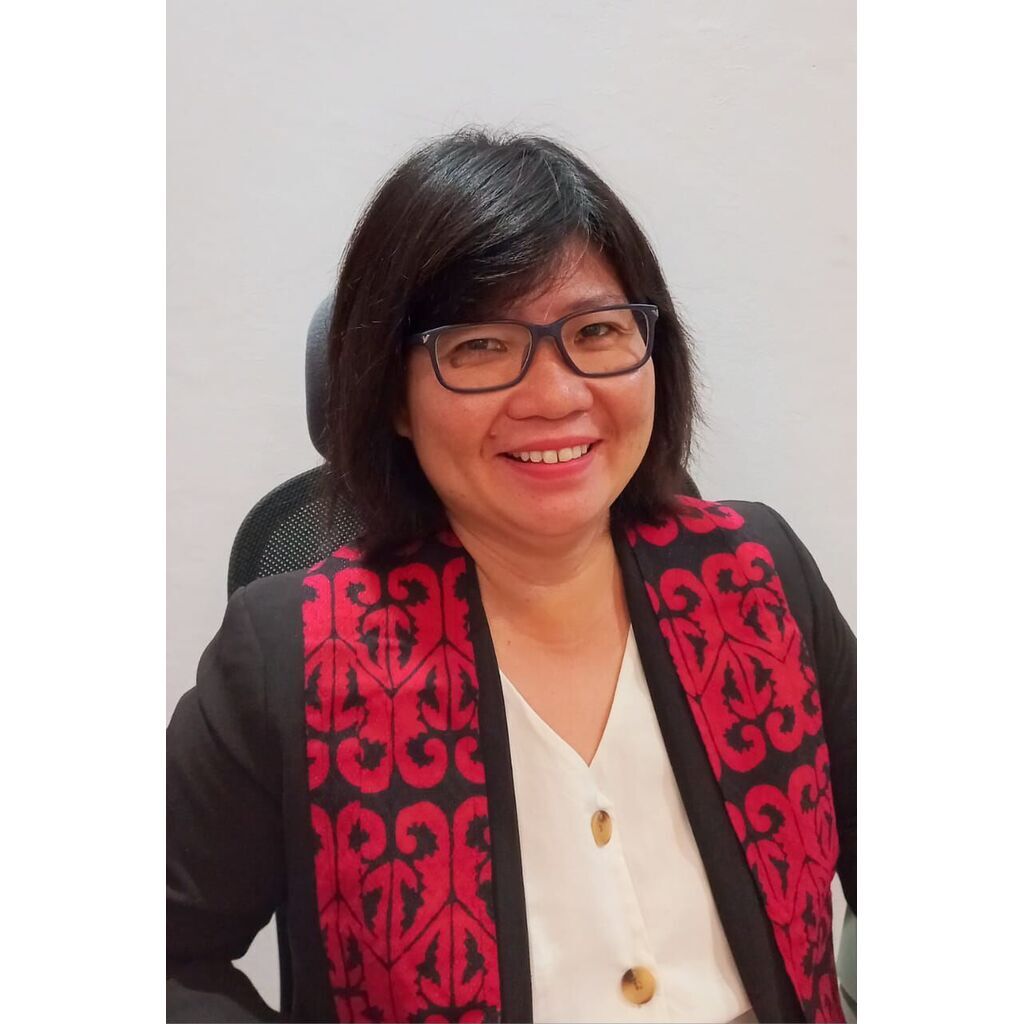
Kristine Tuban

Regional Monitoring, Evaluation, Accountability, And Learning Technical Adviser, Save the Children
MH

Martin Holmstrand

Technical Data Lead, Save the Children
Wednesday September 16, 2026 11:00am - 11:30am ACST
Waterfront 2 Stokes Hill Rd, Darwin City NT, Australia

11:00am ACST

Practical ways to make space for place in the Evaluation of Regreening
Wednesday September 16, 2026 11:00am - 11:30am ACST
Author: Alice Muller, World Vision
Evaluators and development practitioners need to understand how environmental changes impact and result from development programming.  Often finding practical ways to do is a challenge, particularly where complex environmental, biodiversity and climate systems are involved, and where evaluators and practitioners come from social or economic backgrounds with limited biophysical or ecological training. This paper shares how we can better value place and understand environmental consequences in international development projects by letting evaluations be locally-led, with local knowledge and values at the center.

Drawing on real‑world examples from World Vision’s Regreening Communities work, the paper presents three simple tools used by communities t Together, these approaches value place by centring local and Indigenous knowledge and values, assessing change from a local perspective, in a standardised way and using spatial tools that together still contribute to organisational‑level evidence.

First, a community mapping and planning exercise makes space for diverse groups within a community to define what regreening and wellbeing mean in their own environments, surfacing cultural, livelihood and social values that are often invisible in standard indicator frameworks. Second, a community‑assessed Regreening Index provides a structured and repeatable way to assess biophysical conditions and trends over time in relation to community priorities, while still enabling consistent comparison across sites and projects. Third, spatial mapping of regreening sites using a powerful, but freely available tool adapted from the WASH sector, enables evaluators to examine patterns and cumulative effects at project and organisational levels.

While none of these tools is unique in isolation, when combined they lower barriers to including environmental considerations in evaluation practice and generate insights that strengthen learning, adaptive management and sustainability discussions, ethically. The presentation will share engaging practical examples and invite participants to reflect on opportunities to better value place within their own work.


Speakers
avatar for Alice Muller

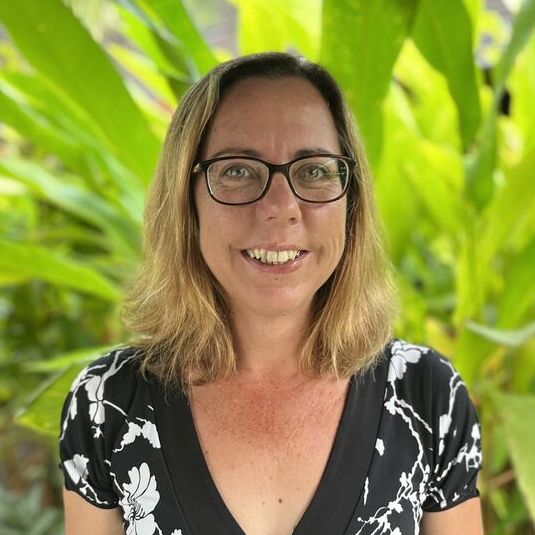
Alice Muller

Senior Monitoring and Evidence Advisor, World Vision
An environmental scientist, working in international development, interested in evaluation and learning about all things community, trees, ecosystem restoration, climate action, scaling and systems transformation.  
I also really like coffee and chatting about gardening, travel and animal anecdotes if you need a break anytime... Read More →
Wednesday September 16, 2026 11:00am - 11:30am ACST
Waterfront 3 Stokes Hill Rd, Darwin City NT, Australia

11:00am ACST

Introduction to Evidence for New, Emerging and Non-Evaluators
Wednesday September 16, 2026 11:00am - 12:00pm ACST
Author: Charlie Tulloch (Policy Performance)

This session at the start of the conference orients new, emerging and non-evaluators to the types of topics and content they will encounter over the coming days. It provides a foundational overview of evidence-related fields (e.g. evidence, monitoring, evaluation, learning), debunks key concepts/language, offers insights into what evaluators do day-to-day, discusses values/valuing, ethical considerations, competencies and key steps usually considered when completing high quality evaluation projects.The session strengthens defines the boundaries and intersections of evaluation and other disciplines to understand this field of endeavour, the pathways in and the opportunities it offers.

The session’s main aims are to share and discuss:
  • How evidence is used in different policy and organisational landscapes
  • The roles and types of projects led by evaluators
  • Techniques frequently used by evaluators•Ways that evaluators think (logic, data, outputs, outcomes, impact)
  • Why and when evaluations happen (or do not)
  • Practical tips for evaluation commissioners and working with evaluators
  • Capability building (skills and knowledge) to promote use of evaluation in-house
  • A seven-stage approach to planning and conducting an evaluation project
  • Essential skills of evaluators, including logic modelling, defining key/interview questions, forming value judgments, and selecting effective evaluation approaches/methods.The session will provide attendees with an opportunity to ask questions anonymously, so they feel very comfortable as the conference commences.

Questions will be addressed during the session, creating an open, interactive discussion.The session will also provide an overview of the conference structure, learning opportunities and flow, to provide a guide to attendees about how to gain the most value from their time.


Speakers
avatar for Charlie Tulloch

Charlie Tulloch

Director, Policy Performance
Policy Performance is a proud conference sponsor! Charlie delivers evaluation projects, capability building support and drives public sector improvement. Charlie loves to help those who are new to evaluation or transitioning from related disciplines. He is a past AES Board member... Read More →
Wednesday September 16, 2026 11:00am - 12:00pm ACST
Hall 2

11:30am ACST

What! No survey? Introducing the Collective Noticing Method (CNM)
Wednesday September 16, 2026 11:30am - 12:30pm ACST
Author: Jess Dart, Clear Horizon
This paper introduces the Collective Noticing Method (CNM) and explores its relevance for measurement, evaluation and learning (MEL). Developed by the author, CNM offers evaluators and changemakers a collaborative way to notice, learn from, and respond to subtle and emerging changes. It is a rigorous yet flexible method with a strong focus on learning and collective sensemaking, well suited to the “messy middle” of systems change and place-based work. It also has potential for community and grassroots work, program portfolios, and research impact tracking.

Collective noticing as a practice has a long history, evident in approaches such as Outcome Harvesting, Most Significant Change (MSC), citizen science, ripple effect monitoring, and context monitoring. More recently, this practice has been enabled and accelerated by emerging digital platforms and AI. Building on these foundations, CNM intentionally harnesses the eyes and ears of those implementing and experiencing an initiative to bring shared attention to what is changing.CNM is inherently participatory, inviting many people to observe, document, and interpret change collectively. It values lived experience as a central source of insight, embraces uncertainty, and supports adaptive action grounded in what is actually emerging. As a decolonising and grounded approach to MEL, CNM shares power by broadening who defines what matters and what counts as evidence. It centres learning-oriented measurement and collective sensemaking, bringing forward subtle signals, relational shifts, and everyday insights that conventional approaches often overlook.

CMN involves impact logging and tracking against agreed ways of working and learnings, whereas Outcome Harvesting focuses on outcomes and tends to be done as a one-off study. It differs from MSC in that CNM uses shorter, multi-perspective logs across diverse categories and evidence types.This session introduces CNM and invites participants to critically explore its benefits, limitations, and the contexts in which it is most—and least—useful.
Speakers
avatar for Jess Dart

Jess Dart

CEO, Clear Horizon
Dr Jess Dart is the founder and Chief Evaluator of Clear Horizon, an Australian-based specialist evaluation company. Having received the 2018 Outstanding Contribution to Evaluation Award from the Australian Evaluation Society (AES), Jess is a recognised leader with over 25 years of... Read More →
Wednesday September 16, 2026 11:30am - 12:30pm ACST
Waterfront 2 Stokes Hill Rd, Darwin City NT, Australia

12:00pm ACST

The Reckoning
Wednesday September 16, 2026 12:00pm - 12:30pm ACST
Author: Salli Cohen (The Policy Room)
This presentation explores the uncomfortable space where policy and evaluation structurally reinforce harm. Its objective is to challenge assumptions of neutrality and examine how evaluative frameworks can either illuminate or obscure inequity.
The core argument is threefold: (1) evaluation and policy are never neutral and must interrogate power; (2) systems alignment and cultural authority determine whether outcomes are real or performative; and (3) accountability must ask “for whom” evaluation and policy work; and who bears the cost.
The session blends applied case insight with structured reflection and peer dialogue to provoke critical engagement and practical recalibration.
Speakers
SC

Salli Cohen

Founder, The Policy Room
Wednesday September 16, 2026 12:00pm - 12:30pm ACST
Waterfront 1 Stokes Hill Rd, Darwin City NT, Australia

2:30pm ACST

Evaluation as a Bridge: The Multiple Hats of MEL in Scaling Government-led Graduation Programmes
Wednesday September 16, 2026 2:30pm - 3:00pm ACST
Authors: Kristian Paolo Torres, BRAC Ultra-Poor Graduation Initiative, Tania Dora Warokka, BRAC Ultra-Poor Graduation Initiative, Arnaldo Pellini, BRAC Ultra-Poor Graduation Initiative
Programmes aiming to influence governance systems and policy reforms—particularly those using experimental approaches—require MEL functions that are able to move across design, strategy, context analysis, and sensemaking.

Traditional M&E often prioritizes linear accountability, struggling to measure influence on policies and behaviors (as noted by the ODI RAPID programme, 2006–2020).

This presentation shares the experience of the BRAC Ultra-Poor Graduation Initiative, which partners with governments across six countries to scale the ‘Graduation’ approach through national social development systems (e.g. social protection, livelihood, labour and employment, etc.). Because UPGI’s success is measured by policy influence and system change rather than direct delivery, the MEL function must act as a strategic bridge rather than a neutral observer.

Drawing on our experience in Indonesia and the Philippines, we share how MEL supports country teams as adaptive units navigating two primary challenges: calibrating the interplay between political commitment, administrative feasibility, and technical quality; and designing for scale from the outset to ensure government ownership rather than isolated pilot results.

We argue that a team learning culture—rather than a "neutral" M&E function—is the essential infrastructure for this work. By establishing specific habits to capture field experience and inform strategic decisions, MEL acts as the "many-hatted" bridge required to navigate these dynamic systemic boundaries and prevent programmes from remaining stagnant.

We will share three core insights from our MEL experience:

1. How the evaluator’s role shifts to an active learning partner, framing field evidence to navigate political and administrative boundaries.
2. How practical tools—such as Capacity and Commitment Rubrics and Diaries—support teams in documenting for learning rather than reporting for compliance.
3. Real-world examples where structured reflection informed specific shifts in government engagement strategies.

The session will also engage the audience in a "Reflection Micro-Workshop" where participants will share insights from their own work and experiences.

Speakers
KP

Kristian Paolo Torres

Research, Evaluation, and Knowledge Management Specialist, BRAC Ultra-Poor Graduation Initiative
TD

Tania Dora Warokka

Senior MEL and Research Analyst, BRAC Ultra-Poor Graduation Initiative
Wednesday September 16, 2026 2:30pm - 3:00pm ACST
Waterfront 3 Stokes Hill Rd, Darwin City NT, Australia

2:30pm ACST

Ignites
Wednesday September 16, 2026 2:30pm - 3:30pm ACST
Who really benefits from a program and how? Using personae to enrich logic models.
Author: Fiona Scott-Melton, Allen + Clarke
Not everyone experiences a program the same way. Yet logic models tend to obscure differences between population groups experiences, needs and aspirations. Incorporating personae helps address this limitation. By representing distinct population groups within a logic model, personae make visible the different routes through which people experience a program and what they gain from it. Drawing on a real life logic model developed for housing disabled people, the session will show how incorporating personae strengthens evaluation design, enriches social return on investment calculations and produces more compelling findings for stakeholders.

Help! The post-it notes have fallen off our logic model and been mixed up!
Author: Robert Grimshaw, ATO
Can you help us piece the logic model back together? This online interactive group activity is one tool used by a large public sector agency to familiarise people with key logic modelling concepts and thinking. This session will provide a practical demonstration of the activity and how it’s being used by workshop participants to apply their learning in a simple and fun way. Participant feedback has confirmed the value of this tool for engaging with and building the capability of a diverse audience who have limited evaluation capability and experience.

Method vs methodology – what’s the difference, and why it matters 
Author: Martina Donkers, Martina Donkers
We’ve got to stop using the words ‘method’ and ‘methodology’ interchangeably. ‘Methodology’ isn’t a slightly-fancier way of saying ‘method’ – it’s actually what conceptually underpins your method choices, and it’s an important thing to reckon with if you want to do evaluation that speaks to your stakeholders, is culturally responsive, is ethical and proportionate, and is ultimately useful. This quick-fire Ignite session will be a rapid deep-dive into practical ways to think about methodology in evaluation, apply it to traditional practice and emerging approaches, and leverage that thinking to do better evaluative work.

Exploring arts-based methods for project evaluation
Authors: Katie Ronson, Creative Australia, Kirstin Clements, Partner Impact & Evaluation
In this presentation evaluation practitioners from Creative Australia and Arts Centre Melbourne share how arts-based evaluation methods can unlock insights about participant experience in contexts where traditional methods struggle.

Evaluating ConnectUp: preferences for a social connectivity app among people with disability and carers
Authors: Feby Savira, Deakin University, Dom Kwasnicka, Deakin University, Lucio Naccarella, Deakin University
Digital platforms are increasingly used to support social connection, yet their design often overlooks the needs of people with disability and their carers. This study evaluates the design of ConnectUp, a social connectivity app, using a discrete choice experiment (DCE) to identify which features matter most and how preferences vary.

A national DCE (n=1,031) was conducted with people with disability, carers, and individuals identifying as both. Participants completed choice tasks comparing hypothetical versions of ConnectUp that varied across cost, communication modes, group structures, anonymity, support features, and information sources. Preferences were analysed using a conditional logit model, with latent class analysis used to identify user segments. Attitudinal questions explored additional features not captured within the DCE.

Three key findings emerge. First, participants were cost sensitive, preferring low- or no-cost options. Second, privacy and control were critical: users preferred small, private group settings and avoided features that compromised anonymity. Third, preferences were heterogeneous. Three segments were identified, including a highly price-sensitive group, a majority group prioritising anonymity and community-generated content, and a smaller segment (18%) more tolerant of cost but still favouring private group structures.

Attitudinal findings highlight additional design considerations. Flexible access features such as membership suspension (73%) and free trial options (77%) were widely valued. Around half of participants prioritised staff training in inclusivity (50%) and access in a preferred language (51%), while over half (54%) preferred human support over automated options.

This presentation demonstrates how combining DCE and attitudinal data can strengthen evaluation of digital services by capturing trade-offs and broader user expectations, and how segmentation can inform more inclusive design decisions. Participants will engage in scenario-based discussion to translate findings into practice.

Thou shall not: The 10 Commandments for Surveys 
Author: Louise Parker, Alinea International
The 10 Commandments for Surveys:
1) Thou shall not ask too many questions - survey fatigue is real and so is wasting people's time. Figure out what you absolutely must know from respondents and craft your questions around that.
2) Thou shall not ask double-barreled questions e.g. 'Did you find the workshop fun and informative?'
3) Thou shall not change the appearance order of repeating yes/no or Likert scale responses - if 'strongly agree' appears on the far right the first time, keep it that way throughout the whole survey.
...plus 7 more fabulous tips!


Speakers
avatar for Robert Grimshaw

Robert Grimshaw

Evaluation Manager, ATO
Robert works in the Australian Taxation Office Evaluation Hub, helping business areas to build their evaluation culture, capacity and practice. This includes providing advice and support for using fit-for-purpose evaluation to inform evidence-based policy and program delivery, and... Read More →
avatar for Kirstin Clements

Kirstin Clements

Partner Impact & Evaluation, Arts Centre Melbourne
KR

Katie Ronson

Evaluation Associate, Creative Australia
FS

Fiona Scott-Melton

Performance And Impact Lead, Allen + Clarke
LP

Louise Parker

Disaster Ready MEL Coordinator, Alinea International
FS

Feby Savira

Research Fellow, Deakin University
Wednesday September 16, 2026 2:30pm - 3:30pm ACST
Waterfront 2 Stokes Hill Rd, Darwin City NT, Australia

2:30pm ACST

Interrogating problem representations in evaluation: Are we solving the right problems?
Wednesday September 16, 2026 2:30pm - 3:30pm ACST
Authors: Andrew Boyle
Development programs often focus on whether interventions achieve intended outcomes, yet comparatively little attention is given to how the problems those interventions seek to address are defined. The way a problem is represented shapes which interventions are considered possible, influencing theories of change, program design, and the evaluation questions that follow.
Speakers
AB

Andrew Boyle

Andrew Boyle Consulting

Wednesday September 16, 2026 2:30pm - 3:30pm ACST
Rooms 3+4 Stokes Hill Rd, Darwin City NT, Australia

4:00pm ACST

Making space for influence: Danjoo Koorliny and decolonising evaluation to measure systems change
Wednesday September 16, 2026 4:00pm - 4:30pm ACST
Author: Doyen Radcliffe, Bajja Yungayimanha Collaboration
Indigenous-led systems change often begins with shifts in cultural authority, relationships, trust and institutional behaviour—long before formal outcomes or policy reform become visible. Yet many evaluation approaches continue to prioritise measurable outputs and short-term results, overlooking the relational, cultural and ethical foundations that drive meaningful change. This creates a gap between what First Nations communities experience as impact and what institutions recognise as evidence.

This presentation introduces the Danjoo Koorliny Five-Dimensional Indigenous Influence Model, developed through the Aboriginal-led impact evaluation of the Danjoo Koorliny movement in Western Australia. The model offers a practical and culturally grounded way to measure systems change by identifying and assessing influence across cultural, relational, behavioural, structural and transformational domains. Central to this work is a decolonising evaluation process that repositions cultural authority, Country and relational accountability as the foundation of ethical and rigorous evaluation. For First Nations evaluation, this means privileging Elder governance, community decision-making, Indigenous Data Sovereignty and culturally grounded methods such as yarning, storywork and outcome harvesting. For evaluation more broadly, it expands how evidence, value and impact are understood in complex systems and supports earlier identification of meaningful change.

The session will highlight three key messages. First, influence is the primary mechanism and measurable pathway of Indigenous-led systems change. Second, decolonising evaluation strengthens methodological rigour by integrating Indigenous and Western approaches rather than positioning them in opposition. Third, valuing place, relationships and cultural integrity improves the relevance, integrity and usefulness of evaluation for communities, policymakers and funders.

The presentation will combine short input, reflective discussion and interactive activities. Participants will explore practical tools, apply the framework to their own contexts, and reflect on how measuring influence can strengthen systems thinking and evaluation practice across diverse sectors.
Speakers
avatar for Doyen Radcliffe

Doyen Radcliffe

CEO & AES Fellow, Bajja Yungayimanha Collaboration
Doyen Radcliffe is a Yamatji Naaguja man from the Midwest Region of Western Australia. Doyen is a community minded individual with a passion for empowering Indigenous communities to reach their real potential to improve quality of life, health, social and economic wellbeing, and inclusion... Read More →
Wednesday September 16, 2026 4:00pm - 4:30pm ACST
Waterfront 3 Stokes Hill Rd, Darwin City NT, Australia

4:30pm ACST

Ignites
Wednesday September 16, 2026 4:30pm - 5:30pm ACST
Why you should leave evaluation (and come back!)
Author: Delyth Lloyd, Australian Centre for Evaluation
After 15 years as an AES member, I stepped away from evaluation for a one-year hiatus. What began as a brief stint in an implementation role quickly transitioned into a fast and furious year using every evaluation skill I had to offer. I negotiated in hard spaces, navigated power dynamics, held space for diversity and ethical complexities. Busy people asked for more rubrics and used them in practice! This presentation distils insights from my transition out of, and back into, the sector. It reflects on the evaluation competencies we hold, and highlights how deeply they are valued by others.

The Evaluation Pub Test: Simple Questions for Public Value 
Author: Amanda Taylor-Short, ARTD
Publicly funded evaluations carry an implicit responsibility to contribute to public good. In practice, evaluations are often viewed as mechanisms for accountability in government decision‑making. This can reinforce a focus on compliance, program‑specific detail, and predefined questions, limiting broader reflection about the contribution of a program and leaving simple but important questions unexplored. This creates a missed opportunity to connect evaluation work with the people and decisions it exists to inform. This presentation explores the Evaluation Pub Test: examining evaluator responsibility to support public value, the benefits of answering simple questions, and considerations for deciding which questions are worth answering.

From scientist to evaluator: Lessons beyond numbers 
Author: Heather Bryan, First Person Consulting
This Ignite traces one evaluator’s unlikely journey from a postgraduate ecologist in Latin America to an honours student modelling climate impacts, and later a data analyst at the Australian Bureau of Statistics - before arriving at the unexpected doorstep of evaluation. Along the way came a new appreciation for the value of qualitative evidence. This talk shares three lessons motivated by moving beyond numbers: outliers are insights rather than errors, stories explain what numbers can’t, and subjectivity, when acknowledged rather than ignored, can strengthen evaluation. Together, these lessons invite a broader view of evidence, where individual stories bring meaning.

Bridging Sectors Through Evaluation: Lessons from a University–Community, Community of Practice
Author: Hannah Morgan, UTS
In 2025, the University of Technology Sydney partnered with Inner Sydney Voice (ISV) to co-design an Evaluation Community of Practice, connecting university evaluators and community practitioners. We reflect on lessons learned from the collaboration, including the value of shared ownership and relational trust in cross-sector work. Community practitioners strengthened their confidence and capability, while UTS deepened its understanding of how to adapt evaluation capacity building to meet the needs of the community sector context. The experience illustrated the mutual benefits of collaboration and the potential of Communities of Practice to advance evaluation through reciprocal learning.

Seeing through their eyes: Photo-Elicitation in Evaluation
Author: Estelle Gaillard, CSIRO
Images can ignite conversation, evoke emotions, elicit reflection and spark new ways of thinking. Photo-elicitation uses photographs in interviews to prompt participants to share insights into their lived experiences that might not surface through standard questions. This Ignite presentation will introduce the method, show practical examples of its use in evaluation and outline the photo-elicitation process. Attendees will leave reflecting on whether — and how — photo-elicitation could fit into their own evaluation toolkit.

Making Space for Boba and Beats: Valuing Grassroots Reality with an Evaluation MVP
Author: Anabelle (pin-chu) Chen, Taiwan Pride
For a volunteer-run grassroots NFP, traditional evaluation often occupies the very space intended for community action. When resources are scarce, every hour spent on data collection undermines the operational realities of the place where we operate. As the President and Evaluator of Taiwan Pride Sydney, I faced this tension at the 2026 Sydney Mardi Gras. How do you measure the cultural impact of a 'Lanterns of Ecstatica, Taiwan Lighting up Asia' float when the generator dies, the music cuts out, and you are forced to march giant illuminated bubble tea cups in total silence?
This Ignite presentation proposes a Minimum Viable Product (MVP) for evaluation. By shifting the focus to macro-validation and systemic consequences, I will demonstrate how grassroots organisations can engineer a structurally sound evidentiary argument that survives real-world disaster. Using aggressive dimensionality reduction and cognitive anchoring, we can design evaluation MVPs that extract maximum validated learning with minimum administrative friction. Let's spill the tea on how to make space for rigorous evaluation when absolutely nothing goes to plan.


Speakers
avatar for Delyth Lloyd

Delyth Lloyd

Director, Australian Centre for Evaluation
This year I'll be chasing interesting new ideas in capacity building, competncies, and facilitation. You'll find me on a quest to up my game in systems thinking, eval theory and methods, and pondering the intersection between rigour and pragmatic evaluation.
avatar for Estelle Gaillard

Estelle Gaillard

Evaluation Officer, CSIRO
I am a social scientist currently working as the Evaluation Officer for the CSIRO Industry PhD (iPhD) Program. 
AT

Amanda Taylor-Short

Senior Consultant, ARTD
AP

Anabelle (pin chu) Chen

President/Evaluator, Taiwan Pride
HB

Heather Bryan

Consultant, First Person Consulting
LP

Louise Parker

Disaster Ready MEL Coordinator, Alinea International
Wednesday September 16, 2026 4:30pm - 5:30pm ACST
Waterfront 2 Stokes Hill Rd, Darwin City NT, Australia

4:30pm ACST

Centring Indigenous worldviews: Warlpiri and the Itaukei Trust Affairs Board case learning
Wednesday September 16, 2026 4:30pm - 5:30pm ACST
Authors: Alexander Gyles (La Trobe University), Allan Mua Illingworth (Muaakia Consulting), Glenda Napaljarri Wayne (La Trobe University), Mildred Napaljarri Spencer (La Trobe University), Raelene Jigili (Central Land Council), Marilyn Vilsoni (Solve Pacific)

“How might we most appropriately track and describe change about impact and wellbeing in Indigenous Australian and Fijian communities?”

Led by Indigenous community researchers and MEL practitioners, the session draws on two grounded case examples: the YWPP (Warlpiri Education and Training Trust, Tanami NT) approach to tracking learning and wellbeing, and community-centred MEL work supported by the Itaukei Trust Affairs Board (TTFB).

The session will be highly interactive: participants will break into small, facilitated groups with community and TTFB representatives to interrogate practice, and the table will close with a plenary synthesis that surfaces cross-case lessons, tensions, and practical next steps for culturally respectful MEL.

Speakers
avatar for Alexander Gyles

Alexander Gyles

Research Fellow - Monitoring and Evaluation, Institute for Human Security and Social Change, La Trobe University
Alex Gyles is a Research Fellow working in Monitoring, Evaluation and Learning (MEL) at the Institute for Human Security and Social Change, La Trobe University. He works closely with Marlkirdi Rose Napaljarri on the YWPP project and finds fieldwork with the YWPP team an exciting learning... Read More →
GN

Glenda Napaljarri Wayne

Glenda Wayne Napaljarri is a community researcher on the YWPP
project from Yuendumu. She has developed her practice working
as an adult literacy tutor in Yuendumu’s Community Learning
Centre. In addition to conducting research in her home community
of Yuendumu, Glenda has travelled... Read More →
MV

Marilyn Vilisoni

Managing Director, Solve Pacific
Wednesday September 16, 2026 4:30pm - 5:30pm ACST
Rooms 1+2 Stokes Hill Rd, Darwin City NT, Australia
 
Thursday, September 17
 

10:30am ACST

Challenging power through MEL: What can Australian and international development evaluators learn from each other?
Thursday September 17, 2026 10:30am - 11:30am ACST
Authors: Elisabeth Jackson (Centre For Human Security and Social Change, La Trobe University), Thushara Dibley Centre For Human Security and Social Change, La Trobe University, Shane D'Angelo Centre For Human Security and Social Change, La Trobe University)

This roundtable explores MEL as a practice that can challenge existing power structures and strengthen community voices. It aims to promote sharing and learning between evaluators in domestic and international contexts and build new connections between evaluators who share similar approaches and principles.

Across diverse approaches such as culturally responsive and Indigenous evaluation, realist approaches, and place-based methods, practitioners are asking: whose worldview shapes what counts as evidence? While the language used in different sectors varies, there are strong common threads: centring marginalised voices, working collaboratively, reflecting on our own assumptions, and valuing local knowledge.

This session is designed for intermediate to advanced evaluators who are thinking critically about power, partnership, and the politics of evidence. Participants will explore what is common across approaches in domestic and international contexts and how these are creating space for different worldviews and supporting forms of evidence that are meaningful to communities.

After a short framing and brief examples, participants will move into structured small-group discussions to surface shared tensions and practical insights. Prompts will include: What is one way your current evaluation practice may reinforce existing power dynamics? Where have you seen MEL genuinely shift decision-making power? What institutional constraints limit these approaches? Groups will then report back in a facilitated plenary. Participants will be invited to identify one insight they will take back into their own practice and one structural barrier the evaluation field needs to address collectively. Key insights will be shared more broadly through a blog developed after the conference.

The roundtable aligns with the aes26 sub-themes Traditional and New Ways and Ethics and Integrity, inviting participants to reflect on their real-world experience of applying participatory and culturally grounded approaches in different contexts and exploring how these can help disrupt existing power relations.


Speakers
avatar for Elisabeth Jackson

Elisabeth Jackson

Senior Research Fellow, La Trobe University - Centre For Human Security and Social Change
Dr Elisabeth Jackson is a Senior Research Fellow at the Centre for Human Security and Social Change where she conducts research and evaluation in Southeast Asia and the Pacific. She is currently co-leading an impact evaluation of a program working with diverse marginalised groups... Read More →
TD

Thushara Dibley

Centre For Human Security and Social Change, La Trobe University
SD

Shane D'Angelo

Centre For Human Security and Social Change, La Trobe University
Thursday September 17, 2026 10:30am - 11:30am ACST
Rooms 1+2 Stokes Hill Rd, Darwin City NT, Australia

11:30am ACST

Case studies – an overlooked technique in evaluation?
Thursday September 17, 2026 11:30am - 12:00pm ACST
Authors: Alan Woodward, Alan Woodward Consulting, Leanne Kelly, Alfred Deakin Institute, Deakin University
Evaluations of community-based and place-based programs regularly require methods capable of examining context, relationships, and emergent outcomes. While case studies are a long-standing qualitative research approach, they are often under-utilized or misunderstood within evaluation practice. Drawing on the evaluation of Australian Red Cross’ Community Resilience Teams as an applied example, the presentation demonstrates how case study design enabled exploration of contextual dynamics, stakeholder perspectives, and underlying mechanisms that would not have been visible through survey or indicator-driven approaches alone. Participants will be offered practical guidance on when case studies are suitable and considerations for conducting case study activities.
Speakers
avatar for Alan Woodward

Alan Woodward

Principal, Alan Woodward Consulting
My evaluation experience is broad, ranging from the conduct of evaluations of programs and services, the commissioning of evaluations, the engagement of communities on evaluation activities, the design of evaluation strategies and capacity building within organisations. I work in... Read More →
Thursday September 17, 2026 11:30am - 12:00pm ACST
Waterfront 2 Stokes Hill Rd, Darwin City NT, Australia

12:00pm ACST

Embedding Ethical Practice in an Evaluation Across Diverse Communities: Lessons from Bangladesh
Thursday September 17, 2026 12:00pm - 12:30pm ACST
Authors: Maud Mukova-Moses, Fred Hollows Foundation, A K M Badrul, Huq Fred Hollows Foundation, Jagath Happuhannadige, Fred Hollows Foundation
Reflecting on a predominantly qualitative evaluation, this paper explores how internally led evaluation can strengthen ethical practice, integrity, and inclusion in complex program settings. Drawing on The Fred Hollows Foundation’s mid-term evaluation of a Gender Equity, Disability and Social Inclusion (GEDSI) eye health project in Bangladesh, the paper examines how the evaluation navigated ethical practice in a context where power imbalances and language differences influenced whose voices were heard.

The evaluation engaged diverse groups, including ethnic minority communities and persons with disabilities. This raised practical ethical questions about language access, interpretation, voice and power. In navigating these complexities, the evaluation sought to incorporate equity, cultural sensitivity, and power-awareness to create space for diverse voices, reveal hidden barriers, and enable more ethical decision-making. Through use of document review, interviews, focus groups and a partner validation workshop, the evaluation intentionally foregrounded lived experience while maintaining analytical independence.

The paper demonstrates that ethical evaluation is not only about safeguarding participants, but also about how evaluators navigate competing priorities, institutional constraints, and contextual power dynamics. By conducting the evaluation internally, the team was able to deepen its understanding of gender, disability, and ethnic inclusion dynamics; build trust with community stakeholders; and generate insights that may have remained invisible.

The paper also explores tensions encountered during validation and interpretation: What does ethical evaluation look like when stakeholder priorities differ? How can evaluators recognise and address power dynamics within interviews, focus groups, and validation workshops? And how can evaluators transparently acknowledge limitations in ways that strengthen trust and learning? By sharing practical strategies and reflective insights, evaluators are invited to move beyond procedural compliance towards a deeper practice of relational accountability and integrity across diverse contexts. The paper offers practical examples of embedding ethical considerations into internal evaluation and using findings to inform practice improvement.


Speakers
JH

Jagath Happuhannadige

Senior Program Quality Advisor, Fred Hollows Foundation
MM

Maud Mukova-Moses

Fred Hollows Foundation
avatar for A K M Badrul Huq

A K M Badrul Huq

Senior Program Manager - Bangladesh, The Fred Hollows Foundation
I am a development professional with approximately 16 years of experience, including eight years of engagement in evaluation-related work. My professional expertise includes monitoring and evaluation, disability inclusion, health program development, strategic planning, and evidence-informed... Read More →
Thursday September 17, 2026 12:00pm - 12:30pm ACST
Waterfront 1 Stokes Hill Rd, Darwin City NT, Australia

1:30pm ACST

Making Space for multiple perspectives: Collaborative design of Value for Investment evaluations
Thursday September 17, 2026 1:30pm - 2:00pm ACST
Author: Adrian Field, Dovetail Consulting
Value for Investment (VfI) is an emerging evaluation system that is gaining increasing traction internationally. The system is intentionally mixed methods, interdisciplinary and collaborative.
It is this collaborative positioning of VfI that this presentation is focused. In VfI framing, value draws from multiple perspectives of what makes a programme, intervention or policy valuable. Therefore, understanding and capturing value requires a fundamentally collaborative mindset, one that reaches beyond existing data sources and reporting, to explore from many different perspectives what it is that fundamentally matters about the intervention that is the evaluation’s focus.

This presentation draws on learning and approaches in exploring value through participatory design techniques. It will draw on approaches developed and refined across a range of VfI evaluations, in the health, mental health, justice, urban development, transport and creative sectors.
The session will describe a range of facilitative techniques adopted to draw on different stakeholders perspectives on value, and the strengths that they offer for building robust, relevant and actionable evaluations.

Using a VfI lens allied with participatory design techniques, the presentation will explore how value can be brought to life across key evaluation questions, theories of change and value propositions, evaluative rubrics, and collaborative sense-making.

Session participants will gain a clear sense of the possibilities and potential for applying participatory approaches in VfI, and the strengths these offer for evaluation practice.


Speakers
AF

Adrian Field

Director, Dovetail Consulting
Thursday September 17, 2026 1:30pm - 2:00pm ACST
Waterfront 2 Stokes Hill Rd, Darwin City NT, Australia

1:30pm ACST

Process tracing in practice: testing causal claims with mixed evidence
Thursday September 17, 2026 1:30pm - 2:30pm ACST
Author: Kizzy Gandy, Jacaranda Partners

Learning objective: Participants will be able to construct core and alternative hypotheses from a theory of change, design evidence tests to distinguish between them and make defensible causal claims.

Contribution analysis is now widely used in Australian evaluation practice, but many evaluators stop short of the next step: systematically testing whether something other than the program explains the observed outcomes. Process tracing does exactly this. It raises the rigour of causal claims not by collecting more data, but by being more deliberate about what the data needs to show — and what it would need to show if the alternative explanation were true instead.

This workshop uses a real evaluation of the Embrace Multicultural Mental Health Project as a case study. The Embrace evaluation combined contribution analysis and process tracing with a mixed-method design including a quasi-experimental quantitative survey and qualitative interviews. It produced a result that many evaluations encounter but few handle well: the quantitative analysis found the program had no detectable effect on key outcomes, yet qualitative evidence suggested it was working. Process tracing provided the analytical framework to distinguish between three plausible explanations — the program failed, the effects take time to materialise, or competing programs are producing the same outcomes.

Participants work through three structured exercises: translating a theory of change into core and alternative hypotheses; designing evidence tests that can distinguish between them; and applying evaluator judgement to weight mixed evidence and reach a defensible conclusion. Each exercise uses the Embrace case, with reflection prompts connecting the method to participants' own evaluations.

The workshop is aimed at intermediate to advanced evaluators working on complex programs.
Speakers
KG

Kizzy Gandy

Jacaranda Partners
Thursday September 17, 2026 1:30pm - 2:30pm ACST
Rooms 3+4 Stokes Hill Rd, Darwin City NT, Australia

1:30pm ACST

Establishing an Indigenous owned and led evaluation process for the Timor-Leste Tais Weaving Ecosystem
Thursday September 17, 2026 1:30pm - 2:30pm ACST
Authors: Nea Harrison, Pandanus Evaluation, Maria do Céu Lopes da Silva
This presentation shares the journey by Timor-Aid and members of the Tais Weavers Network to develop an Indigenous evaluation process that supports intergenerational transmission of knowledge across Timor-Leste. 

The process of building evaluation skills and planning is beginning in Oé-cusse and will extend to other municipalities, enabling the 1,625 Weavers’ Network members to take charge of evaluating the National Tais Weaving Ecosystem themselves.

Tais is an intricate and beautiful fabric that is deeply embedded in Timorese culture. It is a symbol of identity and heritage and is used in traditional ceremonies and celebrations. Weaving Tais is a sacred process that has been passed down from generation to generation. UNESCO recognised Timor – Leste Tais as an Intangible Cultural Heritage in urgent need of safeguarding in 2021. 

This participatory and developmental evaluation work helps preserve this precious tradition. It is supported by an Asia Pacific Evaluation Association (APEA) and EvalIndigenous seeding grant provided to promote culturally responsive, Indigenous-led evaluation practices across the region.

The interactive presentation will share our work so far to: 
- build local evaluation knowledge and skills;
- develop locally owned and led, equitable, and inclusive evaluation plans that acknowledge the social, cultural and governance practices of Indigenous Timorese peoples;
- develop Indigenous evaluation data collection and information sharing resources that showcase the evaluation learnings, celebrate and build awareness of the importance Tais to Timor Leste people’s cultural traditions, values and languages;
-coach and mentor young weavers and Timor Aid staff to build their confidence and leadership skills to lead ongoing evaluation activities.

The audience will have the opportunity to explore some of these evaluation strategies. They will engage in an interactive discussion about the importance of inclusive evaluation strategies that build on local knowledge and skills and promote Timor-Leste’s cultural traditions, values, and languages.

Speakers
avatar for Nea Harrison

Nea Harrison

Director, Pandanus Evaluation
I have been an evaluator and member of the AES for over 20 years. I live in Darwin and work in Australian and international evaluation spaces.  I support government, non-government, First Nations, multilateral and community agencies to develop responsive, practical and rigorous MEL... Read More →
Thursday September 17, 2026 1:30pm - 2:30pm ACST
Waterfront 1 Stokes Hill Rd, Darwin City NT, Australia

3:30pm ACST

Is this going somewhere? Using evaluations to broker organisational change
Thursday September 17, 2026 3:30pm - 4:00pm ACST
Author: Victoria Pilbeam (SPC), India Lynn (SPC)

How many robust evaluations get left on shelves? What can we do when good evaluations are overlooked? The true value of evaluative practice lies not in the reports or their recommendations, but what comes after, how we use them to broker organisational change is the route to success.
To ground these questions, our session will use a case study on capability development – a fundamental part of our work at the Pacific Community (SPC) Fisheries Aquaculture and Marine Ecosystems division. At SPC, our scientists and technical staff travel across the Pacific delivering training on a wide range of topics with the goal of enhancing the sustainable management and economic, food security, and cultural benefits of Pacific fisheries. Our capability development aims to achieve change on the ground, in the ministries, communities and industries of our member countries and territories. But successive evaluations have told us that, despite all this training, we are not necessarily seeing the desired results and that we need to explore different modalities to bring about true capability strengthening.
So, how did we dust off these evaluations and use them to chart a new pathway to impact? In this session, we will discuss how we used a combination of behaviour change research, co-design, and organisational change management to move the dial using existing reviews. This approach is rooted in theoretical, cultural and contextual considerations, including behaviour change models and Pacific pedagogies. Our paper will illustrate how taking a grounded approach can make evaluation relevant and learning strategic. Whilst, inviting participants to reflect on their own experiences and their roles in shepherding evaluations from good recommendations towards genuine organisational change.    
Speakers
avatar for Victoria Pilbeam

Victoria Pilbeam

MEL Adviser, Pacific Community | Communauté du Pacifique
At the Pacific Community, I support MEL for fisheries, aquaculture and marine ecosystems across the Pacific Islands region. Previously, I worked for WWF-Australia and in consulting with a range of not-for profit, government , and philanthropic partners. I like MEL that is approachable... Read More →
avatar for India Lynn

India Lynn

MEL Officer, Pacific Community | Communauté du Pacifique
Thursday September 17, 2026 3:30pm - 4:00pm ACST
Rooms 1+2 Stokes Hill Rd, Darwin City NT, Australia

4:00pm ACST

Quality evaluation that makes a difference: continuing the conversation
Thursday September 17, 2026 4:00pm - 5:00pm ACST
Author: Carina Calzoni, AES Rob Sale, nous

The AES has been exploring its vision of “quality evaluation that makes a difference” through a strategic project - engaging members and examining evaluation theory and practice. This work has surfaced a central challenge: while the phrase is compelling, its meaning is complex, contested, and shaped by context.

This roundtable begins from that complexity—but does not seek to resolve it. Instead, it focuses on what comes next.
We will briefly share insights from the journey so far, including the multiple dimensions of “evaluation”, “quality”, and “making a difference”. These span tensions between evaluation as process, product, and profession; competing perspectives on quality (e.g. standards, utility, impact, values); and diverse understandings of use and influence across contexts and stakeholders.

The primary purpose of the session is to co-design how this conversation continues across the AES community. Participants will engage in facilitated small-group discussions to explore key questions: What does quality evaluation mean in your context? Who defines it? What does “making a difference” look like—and for whom? How should these conversations evolve as contexts, practice, and membership change?

Participants will then work together to identify practical ways to sustain and deepen engagement, such as ongoing communities of practice, publications, podcasts, or future conference formats. The session will capture and share these ideas to inform AES’s ongoing work.

Designed for intermediate to advanced evaluators, this roundtable creates space for collective reflection and future-oriented dialogue. By centring plurality and participation, it supports the AES vision by keeping the conversation alive—recognising that what constitutes “quality evaluation that makes a difference” must continue to evolve with the field.
Speakers
Thursday September 17, 2026 4:00pm - 5:00pm ACST
Rooms 3+4 Stokes Hill Rd, Darwin City NT, Australia

4:00pm ACST

Looking upstream and downstream: longitudinal case studies of climate and water resilience
Thursday September 17, 2026 4:00pm - 5:00pm ACST
Authors: Stuart Raetz, Climate Resilient Communities, Primatia Romana Wulandari, Alinea International
This panel will explore and contrast Monitoring, Evaluation and Learning (MEL) insights from two Australian international development investments undertaking evaluative longitudinal case studies that aim to monitor changes in community and institutional resilience over an extended period: The Australian Water Partnership (AWP) and Climate Resilient Communities (CRC). AWP are retrospectively studying 10 years of water governance investments (2015–2025), while CRC are undertaking evaluative case studies of how communities are adapting to climate change in five countries (Kiribati, Tonga, Fiji, Cambodia and Timor-Leste) in the Indo Pacific (2026 – 2029).

Drawing on emerging insights, evidence and learnings from these two programs the session will explore the enabling conditions that support community and institutional resilience in a changing climate.

The panel will discuss how:

1.Different vantage points reveal different resilience dynamics. AWP’s retrospective longitudinal analysis uncovers patterns of institutional strengthening, governance adaptation, and enabling conditions that only emerge over time, while CRC’s evaluative case studies will illuminate how climate resilience is context specific and driven by locally led adaptation practices.

2.Complementary methodologies strengthen evaluative insight. Both programs use participatory, outcome oriented, and complexity sensitive approaches—providing methodological alignment while generating distinct, mutually reinforcing evidence streams.

3.Integrated evidence supports better climate informed programming. When institutional governance evidence is paired with forward looking community insights, development programs gain stronger foundations for policy engagement, climate integration, and long-term investment planning.

The panel will provide illustrative examples from programming to contrast retrospective and forward-looking approaches to longitudinal case studies.

Audience interaction will be promoted through short provocations and facilitated reflection that will elicit insights from the audience. The panel will support a practical understanding of the challenges and opportunities in monitoring and evaluating resilience and stimulate discussion on how MEL can help programs to navigate complexity in a changing climate.
Speakers
SR

Stuart Raetz

Monitoring, Evaluation And Learning Lead, Climate Resilient Communities
PR

Primatia Romana Wulandari

Senior Consultant, Alinea International
Thursday September 17, 2026 4:00pm - 5:00pm ACST
Waterfront 3 Stokes Hill Rd, Darwin City NT, Australia

4:00pm ACST

Meeting new challenges with better theories of change
Thursday September 17, 2026 4:00pm - 5:00pm ACST
Authors: Patricia Rogers, Footprint Evaluation Initiative, Emil Laurberg Morgensen, University of Southern Denmark
Theories of change are now commonly used to design initiatives, including projects, programs and policies, and to shape monitoring and evaluation.  But 40 years after first being showcased at an AES conference, these are often developed and used in ways that don’t fit what is needed, especially to support adaptation across different settings and in changing contexts.  This session will present common mistakes, what they are, why they matter, and examples of better strategies.  Participants will engage with exercises to identify issues, try out strategies and explore possible applications in their own work and in shaping organisational requirements and procedures.
Speakers
avatar for Patricia Rogers

Patricia Rogers

Co-founder, Footprint Evaluation Initiative
Founder of BetterEvaluation and former Professor of Public Sector Evaluation at RMIT University. Now working as consultant and advisor. My work has focused on supporting appropriate choice and use of evaluation methods and approaches to suit purposes and context. I am currently working... Read More →
avatar for Emil Laurberg Mogensen

Emil Laurberg Mogensen

Odense University Hospital, Department Of Clinical Research, University Of Southern Denmark
Thursday September 17, 2026 4:00pm - 5:00pm ACST
Hall 2
 
Friday, September 18
 

11:30am ACST

Ignites
Friday September 18, 2026 11:30am - 12:30pm ACST
Culturally Grounded Evaluation: Innovative Methods from the Champions4Change Workshop 
Sunet Jordaan, Heart Foundation, Jacinta Hegarty, Heart Foundation
The Champions4Change program is a First Nations–led initiative supporting people with lived experience of acute rheumatic fever (ARF) and rheumatic heart disease (RHD) to lead culturally safe education and advocacy about ARF and RHD their community. In 2025, the Heart Foundation delivered a Champions4Change workshop designed to strengthen knowledge, confidence and leadership skills among Champions. Evaluating this workshop required methods that were not only effective but culturally grounded and inclusive for participants with diverse languages, cultures and lived experiences.

This presentation shares the innovative evaluation approach used to assess knowledge gained, confidence built and participants’ workshop experience. Instead of conventional surveys, evaluators used Yarning circles, storytelling, and visual self-assessment tools. It created a culturally safe environment where Champions could express themselves in ways aligned with community ways of knowing, being and doing. First Nations facilitators who have built relationships with the champions presented the workshop. Champions placed themselves along a visual “road journey” to represent shifts in confidence. They described their understanding of ARF/RHD before and after training through yarning conversations and reflected on the workshop through group storytelling discussions. This approach produced richer and more meaningful insights than traditional surveys alone.
Three key messages will be highlighted:
1.Culturally grounded methods generate deeper, more authentic evaluation insights than commonly used evaluation tools amongst First Nations Peoples.
2.Visual and narrative approaches improve accessibility.
3.Evaluation can make space for lived experience leadership and self determination.

The session will include demonstrations of the visual scaling tools used in the evaluation, along with examples of themes, quotes and insights generated through the evaluation. This will show how culturally grounded methods can strengthen the quality and depth of evaluation findings. This presentation is aimed at foundational and intermediate evaluators interested in practical, culturally responsive techniques that support inclusive evaluation practice.
Agile Evaluation Approaches to Combatting Antisemitism in Australia
Author: Linda Gyorki, Allen and Clarke, Milo McKay, Allen and Clarke
his presentation makes the case for agile evaluation by demonstrating what methodological responsiveness looks like in practice through a real-world evaluation of place-based initiatives aimed at combating antisemitism and strengthening social cohesion.

Agile evaluation is increasingly essential. As global political developments, rising social polarisation, and the rapid spread of misinformation reshape local community dynamics, evaluators working in complex and sensitive environments can no longer rely on fixed designs. This presentation shows how evaluation can adapt without sacrificing rigour or credibility when the ground keeps shifting.

Three key lessons from this evaluation illustrate what agile practice looks like in action. First, polarisation affects who participates and how. Political and social tensions shape stakeholders' willingness and capacity to engage, making trust-building and relationship maintenance core evaluation competencies. Second, iterative data collection is essential. Multiple cycles of data gathering and reflection allow evaluators to surface emerging issues, adjust methods, and stay relevant as community dynamics evolve. Third, responsiveness itself builds credibility. When evaluation processes visibly adapt to local events and stakeholder realities, findings become more useful and the evaluation earns greater trust from the communities it serves.

Aligning with the conference theme "Making space, valuing place," the presentation examines how local evaluation practice must remain grounded in community experience even as it responds to broader global forces.
The session will be delivered as a concise 15-minute presentation with slides, sharing practical insights and methodological lessons for evaluators working in politically dynamic environments. Participants will be invited to reflect briefly on agility challenges in their own contexts, with the session closing on guided discussion prompts around navigating sensitivity, responding to external events, and maintaining rigour through adaptation.
Co-design and evaluation as bridges: An adaptive approach to delivering technology for coral reef conservation
Authors: Emily Maher, Australian Institute of Marine Science, Britta Schaffelke, Australian Institute of Marine Science, Ashton Gainsford, Australian Institute of Marine Science, Yashika Nand, Australian Institute of Marine Science, L.V. Nguyen, Institute of Oceanography, Glenda Cadigal, Palawan Council for Sustainable Development, D. Metali, Department of Fisheries Brunei Darussalam, Manuel Gonzalez Rivero, Australian Institute of Marine Science
Delivering multilateral science and technology-based conservation projects require working across disciplinary, sectoral, cultural and institutional boundaries. This involves engagement and partnership with multiple and diverse stakeholders, navigating unfamiliar governance structures and adapting to local conventions; complexities that are evident in coral reef monitoring and management in Southeast Asia. Here, efforts are also constrained by limited resources, capacity and capability and are often delivered in isolation, reducing their overall impact in supporting conservation efforts.

We present the adaptive project management and evaluation approaches used by the Australian Instit
Speakers
avatar for Sunet Jordaan

Sunet Jordaan

Senior Evaluation Lead, Heart Foundation
EM

Emily Maher

Project Manager- Coral Innovation, Australian Institute of Marine Science
DR

Duncan Rintoul

Managing Director, Rooftop Social
CC

Cath Cooper

Senior Program Analyst, Brave Foundation
LG

Lynda Gyorki

Director, Allen + Clarke
MM

Milo McKay

Allen + Clarke
RC

Ramakrishna Chondur

Research Officer, NT Department Of Health
Friday September 18, 2026 11:30am - 12:30pm ACST
Waterfront 2 Stokes Hill Rd, Darwin City NT, Australia

11:30am ACST

Evaluation professionalisation: where to from here?
Friday September 18, 2026 11:30am - 12:30pm ACST
Authors: Eleanor Williams, ACE, Jade Maloney, ARTD, Jess Buchwald
Did you grow up wanting to be an evaluator? For most of us the answer is no, and there is value in the way we have all fallen into evaluation profession from diverse backgrounds.

But what does this mean for our career pathways and the way others think of evaluation and evaluators? What does it mean for evaluation as a profession?

As the leading voice for evaluation in Australian, the Australian Evaluation Society has long considered options for and pathways to professionalisation that strengthen our roots as a society, and develop the routes to a future in which evaluation profession is increasingly recognised and valued.

The 2024-2028 AES Strategic Plan firmly put considering pathways to professionalisation back on the agenda. A working group has since been exploring options for professionalisation, drawing on learnings from the review undertaking by Peersman and Rogers in 2017, consistent with the AES values, and informed by the experiences of other evaluation associations and other professionalisation associations in Australia.
Now it’s time to seek your views because professionalisation is for you, the Australian evaluation community.

Harnessing the success of the fishbowl approach to exploring quality evaluation that makes a difference at the 2025 conference, we are inviting everyone to jump in and share their thoughts about the value professionalisation would provide, and the risks to be managed to ensure the pathway are accessible, inclusive and respectful of diverse ways of knowing. The working group understands there are diverse views on professionalisation and invites these to be surfaced in this conversation.

The session will be facilitated by professionalisation working group co-chairs Eleanor Williams, Jade Maloney and Jess Buchwald with opportunities to contribute live or through written formats. The working group will use what you share in shaping the route forward.

And yes, there will again be chocolate fish rewards for contributors.

Just think: What would it look like if the next generation could grow up wanting to be an evaluator? What if when you became an evaluator you could see a clear pathway forward?


Speakers
avatar for Jade Maloney

Jade Maloney

CEO, ARTD
I work with government agencies, not-for-profits and citizens to co-design, refine, communicate and evaluate social policies, regulatory systems and programs. I am passionate about ensuring citizens have a voice in shaping the policies that affect their lives, translating research... Read More →
avatar for Eleanor Williams

Eleanor Williams

Managing Director, ACE
Eleanor Williams is the Managing Director of the Australian Centre for Evaluation and established the Australian Public Sector Evaluation Network in 2019. She is a former AES Board member and chairs the OECD's Public Policy Evaluation Experts group.

Eleanor is currently undertaking PhD research on evidence use in fast-paced policy contexts with supervisors at the University of Queensland and University College London and has a particular interest in rapid evaluation methods... Read More →
Friday September 18, 2026 11:30am - 12:30pm ACST
Hall 2

11:30am ACST

Staying Grounded in Complexity: Designing an M&E System for Counter-Trafficking in Persons
Friday September 18, 2026 11:30am - 12:30pm ACST
Authors: Anne Stephens, Ethos of Engagement, Jill Thomas
This presentation explores the design of a systemic Monitoring and Evaluation (M&E) system for counter-trafficking in persons (CTIP) in the ASEAN region. Developed in 2023, the system supports the adoption and implementation of three victim-centred and gender-sensitive guides for counter trafficking in persons, in use across ASEAN member states. The presentation focuses on how systemic, participatory approaches to evaluation design can enhance uptake of evaluation and the role of a well-designed framework to support the capacity of individuals to monitor and evaluate their work.  

The objective of this presentation is to present the process used to develop a simple to use M&E system within a complex setting; show the public facing guidance documents and tools used to support novice and highly skilled evaluators to use the system; and describe our challenges and learnings.

This presentation offers a timely and practice-grounded contribution to the evaluation field by demonstrating how evaluators can design for relevance, capacity development and impact in complex, real-world settings. It provides actionable insights for practitioners seeking to strengthen the value and use of evaluation in increasingly uncertain and contested environments.


Speakers
avatar for Anne Stephens

Anne Stephens

Director, Ethos of Engagement
Anne is the Director and Co-Founder of Ethos of Engagement Consulting a global and women-led research and evaluation firm. We work in Africa, the Asia-Pacific, Central America, UK and USA. We use Inclusive Systemic Thinking to guide our methodology and approaches and diversity is... Read More →
avatar for Jill Thomas

Jill Thomas

Senior Consultant, J.A Thomas & Associates
Jill is an experienced evaluator and analyst, having worked in the health, higher education and finance sectors in major cities and far northern Queensland. Jill specialises in working with organisations to design and implement performance monitoring and evaluation frameworks, conduct... Read More →
Friday September 18, 2026 11:30am - 12:30pm ACST
Waterfront 1 Stokes Hill Rd, Darwin City NT, Australia

1:30pm ACST

Making Space for Economics: Lessons from Comparative Advantage in CGIAR
Friday September 18, 2026 1:30pm - 2:00pm ACST
Author: Matthew Armstrong, CGIAR
This presentation provides practical insights on how and when to use economics in evaluation. Economic ideas shape public policy, funding, and program design. Economics promises efficiency, cost effectiveness, value for money and optimisation. Many evaluation theories, for example Stufflebeam’s CIPP model (2007), Scriven’s (2007) consumer orientated model, and Patton’s (2003) utilisation-focused model are biased towards the social concerns of evaluation.

Yet, evaluators are often tasked with incorporating economic concepts, methods and language into evaluations. But how do we make them fit-for-purpose, credible and culturally appropriate? This case study examines when and how economic concepts should be integrated into evaluation.

CGIAR, a global agricultural research network, is introducing tools to apply comparative advantage in portfolio design and evaluation. Comparative advantage suggests organisations should specialise in areas where they are relatively strongest and partner elsewhere to maximise impact. The theory is compelling: comparative advantage offers reduced duplication and deliberate partnerships at lower costs.

However, how do we credibly measure and make evaluative judgements about comparative advantage? This study found considerable variation in how comparative advantage was applied across the organisation and consternation in response to the roll-out that hindered its usefulness. This presentation describes an interdisciplinary negotiation undertaken to develop guidance for rigorous process and performance evaluations of comparative advantage within CGIAR. It involves a structured process to identify synergies and tensions between existing evaluation and economic practice relating to comparative advantage, a step-by-step approach to undertaking evaluations with comparative advantage criteria, and recommendations for developing an organisation-wide approach to comparative advantage to support consistent, high-quality. Furthermore, this case study illustrates a crucial requirement to reflect upon how economics is integrated into evaluation, including when it should be adapted or challenged.

In the interactive component, participants will reflect on how economics shapes evaluation in their organisations.


Speakers
MA

Matthew Armstrong

Evaluation Analyst, CGIAR
Friday September 18, 2026 1:30pm - 2:00pm ACST
Waterfront 2 Stokes Hill Rd, Darwin City NT, Australia
 
  • Filter By Date
  • Filter By Room
  • Filter By Type
  • Format
  • Audience Level
  • Industry
  • ID
  • Timezone

Share Modal

Share this link via

Or copy link

Filter sessions
Apply filters to sessions.