About me
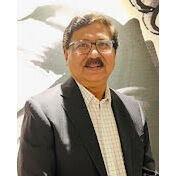
Dr M. Amanullah (Mak) Khan, widely known as Mak Khan, is an Australian citizen who has lived and worked in Australia since 1992, having migrated while serving with the United Nations. He brings nearly four decades of experience in international development, public policy, education reform, and cultural engagement, with professional work undertaken across 35 countries, including extensive engagement throughout the Asia-Pacific and the Pacific Islands region. Dr Khan began his career in the United Nations system, serving in senior leadership and representational roles such as Program Manager at UNDP Headquarters in New York, Deputy Resident Representative of UNDP (Nepal), and Country Director of UNODC. In these roles, he worked closely with national governments and development partners on monitoring, evaluation and learning, governance reform, education and skills development, social protection, health-related policy, and aid coordination, translating policy commitments into implementable, accountable programs. Since settling in Australia, Dr Khan has combined international engagement with strong academic and community roots. He was a Founding Director and Associate Professor at the University of Melbourne, where he helped establish the Development Studies Program and taught postgraduate students from more than 25 countries. He remains an Honorary Senior Fellow of the University and continues to contribute to policy dialogue, research, and professional forums in Australia and internationally. He was a senior Manager of Oxfam Australia, and then a Director of Curriculum Corporation (now Education Services Australia), a ministerial body owned by the Federal and States Minister of Australia, and New Zealand’s Education Minister. A significant part of Dr Khan’s work has focused on supporting Australian development cooperation in the Pacific and the wider Asia-Pacific region, beginning in the AusAID era and continuing under DFAT, either directly or through multilateral partnerships with the United Nations, Asian Development Bank (ADB), World Bank, International Organization for Migration (IOM), and International Labour Organization (ILO). In the Pacific, his work has spanned Fiji, Papua New Guinea, Solomon Islands, Samoa, Tonga, Vanuatu, Kiribati, Tuvalu, Nauru, Marshall Islands, Micronesia, Cook Islands, Niue, and Guam, working closely with central agencies, line ministries, and regional institutions to advance Australian-supported initiatives in education reform, public service capacity building, skills and workforce development, social protection systems, health and community resilience, climate adaptation, and results-based monitoring and evaluation. Beyond the Pacific, Dr Khan has worked extensively across Bangladesh, Cambodia, Nepal, Sri Lanka, Indonesia, the Philippines, Vietnam, Mongolia, China, Lao PDR, Thailand, and Timor-Leste, frequently leading large and complex programs funded by DFAT, ADB, the World Bank, FCDO, the European Union, UNICEF, UNDP, ILO, and IOM, with a sustained focus on education and TVET reform, teacher development, social security and poverty-graduation strategies, and institutional strengthening for inclusive and effective service delivery. He also runs his own private consulting business (www.rmdg.com.au) in Melbourne. Alongside his policy and academic career, Dr Khan is also widely respected for his cultural contributions under his artistic name Chanchal Khan. He is a Rabindra Sangeet singer, trainer, researcher, and documentary filmmaker, and the founding President of Tagore Society Dhaka. He has established music and cultural initiatives in Australia and Nepal, taught students from diverse backgrounds, and produced internationally screened documentaries on Rabindranath Tagore, contributing to intercultural understanding and community cohesion. Dr Khan is the author of COVID-19: Facts, Factoids and Conspiracies and has published widely on development policy, education reform, governance, and evaluation. Across his professional and cultural life, he has sought to bridge global experience with local relevance, bringing international insight into meaningful community and public engagement. Based in Ringwood, Victoria, Dr Khan remains actively engaged in community support, multicultural dialogue, and policy-informed civic participation, and is keen to contribute his experience to initiatives that strengthen social cohesion and Australia’s constructive engagement both domestically and internationally.

 LinkedIn